The Elm Family in North America
Elm was once one of the most beloved trees in America — lining streets coast to coast until Dutch Elm Disease devastated populations starting in the 1930s. As lumber, elm species divide into "hard" and "soft" categories with significant differences.
Soft Elms
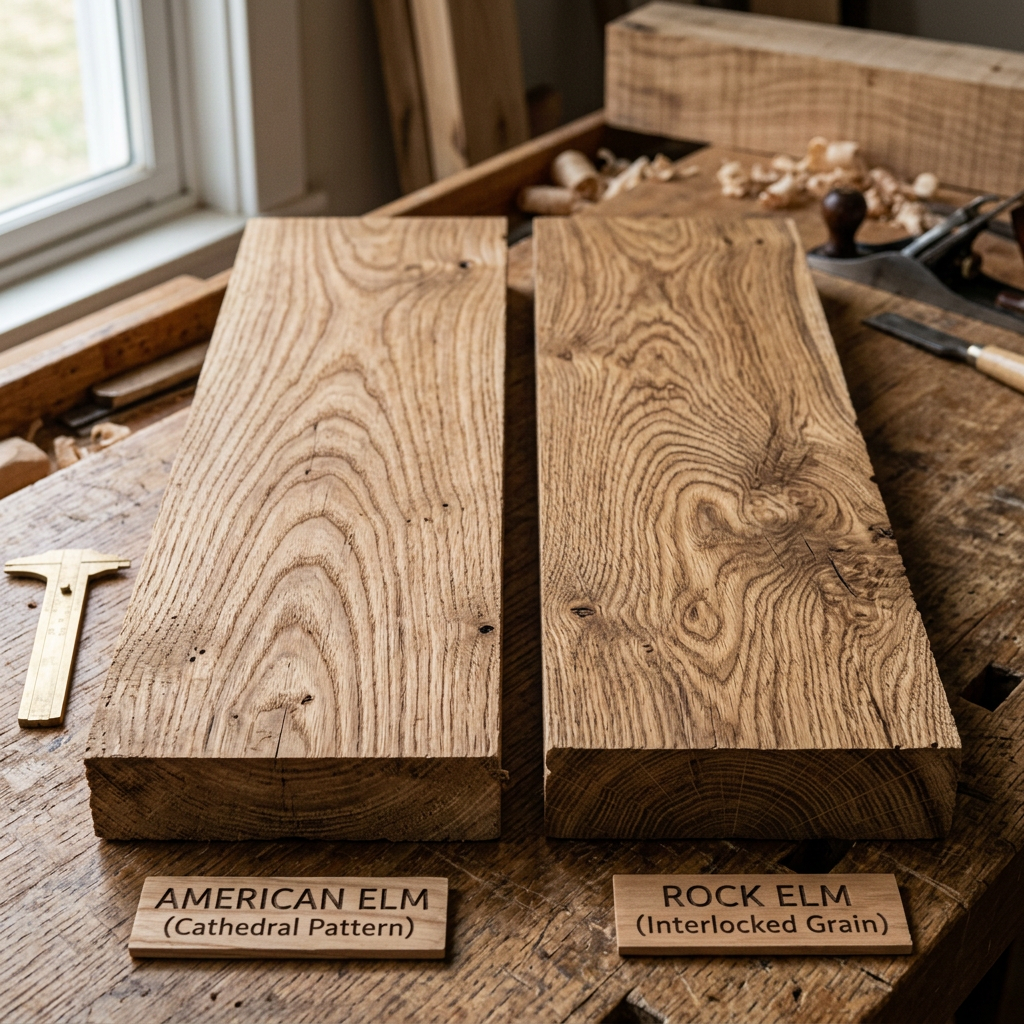
American Elm (Ulmus americana)
- •Janka Hardness: 830 lbf
- •Density: 35 lb/ft³
- •Color: Light to medium brown
- •Key property: Highly interlocked grain — nearly impossible to split
- •Uses: Bent parts, hockey sticks, boxes, crates
Slippery Elm (Ulmus rubra)
- •Janka Hardness: ~860 lbf
- •Density: 37 lb/ft³
- •Color: Similar to American Elm, slightly reddish
- •Key property: Inner bark is mucilaginous (slippery when wet)
Hard Elm
Rock Elm (Ulmus thomasii)
- •Janka Hardness: 1,320 lbf
- •Density: 44 lb/ft³
- •Color: Light brown, similar to other elms
- •Key property: Much harder and heavier than soft elms
- •Uses: Piano frames, agricultural implements, boat frames
Rock Elm is significantly different from the soft elms — it's nearly as hard as White Ash and much heavier.
Key Differences
| Feature | Soft Elm | Rock Elm |
|---|---|---|
| Hardness | 830-860 lbf | 1,320 lbf |
| Weight | 35-37 lb/ft³ | 44 lb/ft³ |
| Workability | Moderate (interlocked grain) | Harder to work |
| Availability | Limited | Rare |
Identifying Elm
Elm is distinctive among hardwoods for its:
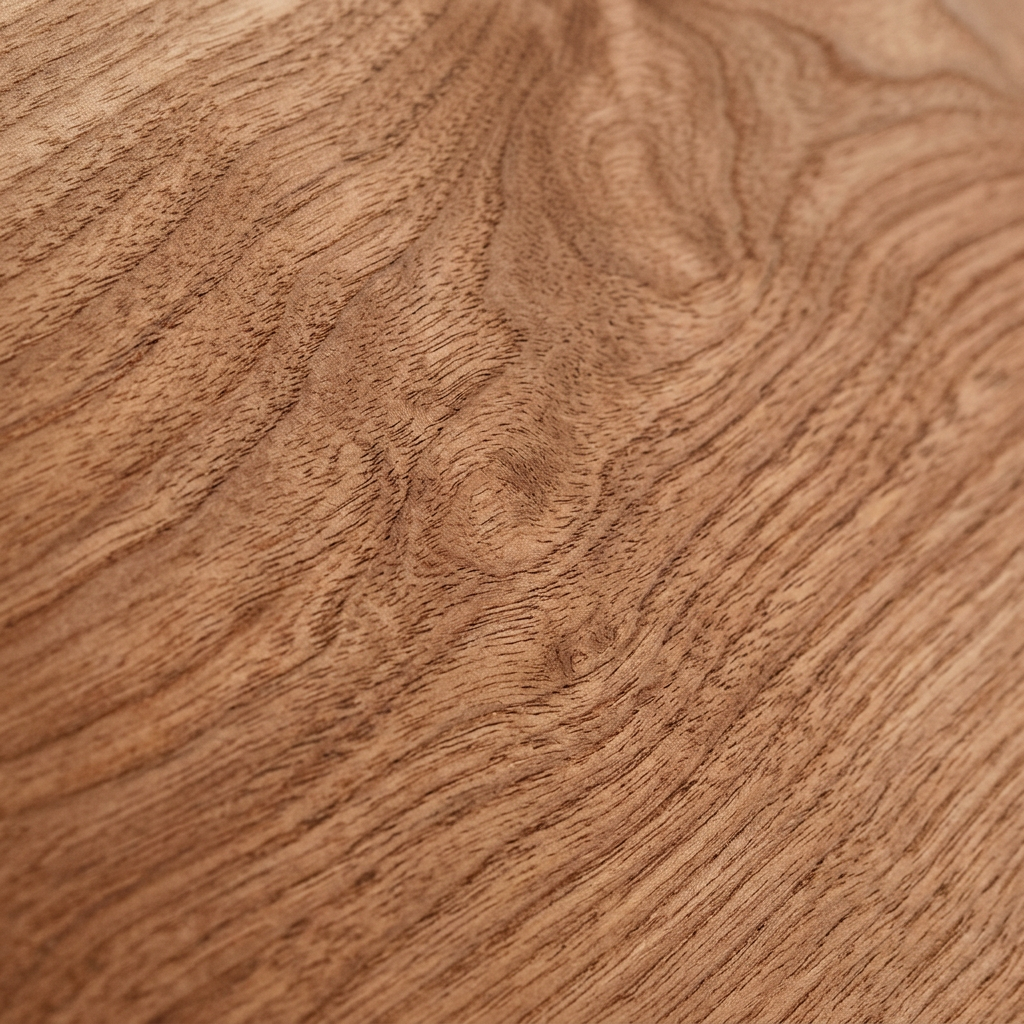
- •Interlocked, stringy grain that resists splitting
- •Ring-porous structure with a wavy pattern of earlywood vessels
- •Slight odor when wet (somewhat unpleasant)
- •Toughness — it flexes and bends rather than breaking cleanly
Availability Note
Dutch Elm Disease has drastically reduced elm populations and commercial availability. When elm lumber does appear, it often comes from urban removals or salvage operations. If you find good elm, consider yourself fortunate.