Not All Maple Is Created Equal
"Maple" encompasses dozens of species, but in commercial lumber, it's divided into two categories: Hard Maple (primarily Sugar Maple) and Soft Maple (several species including Red Maple, Silver Maple, and Bigleaf Maple).
The differences are significant enough to affect project outcomes.
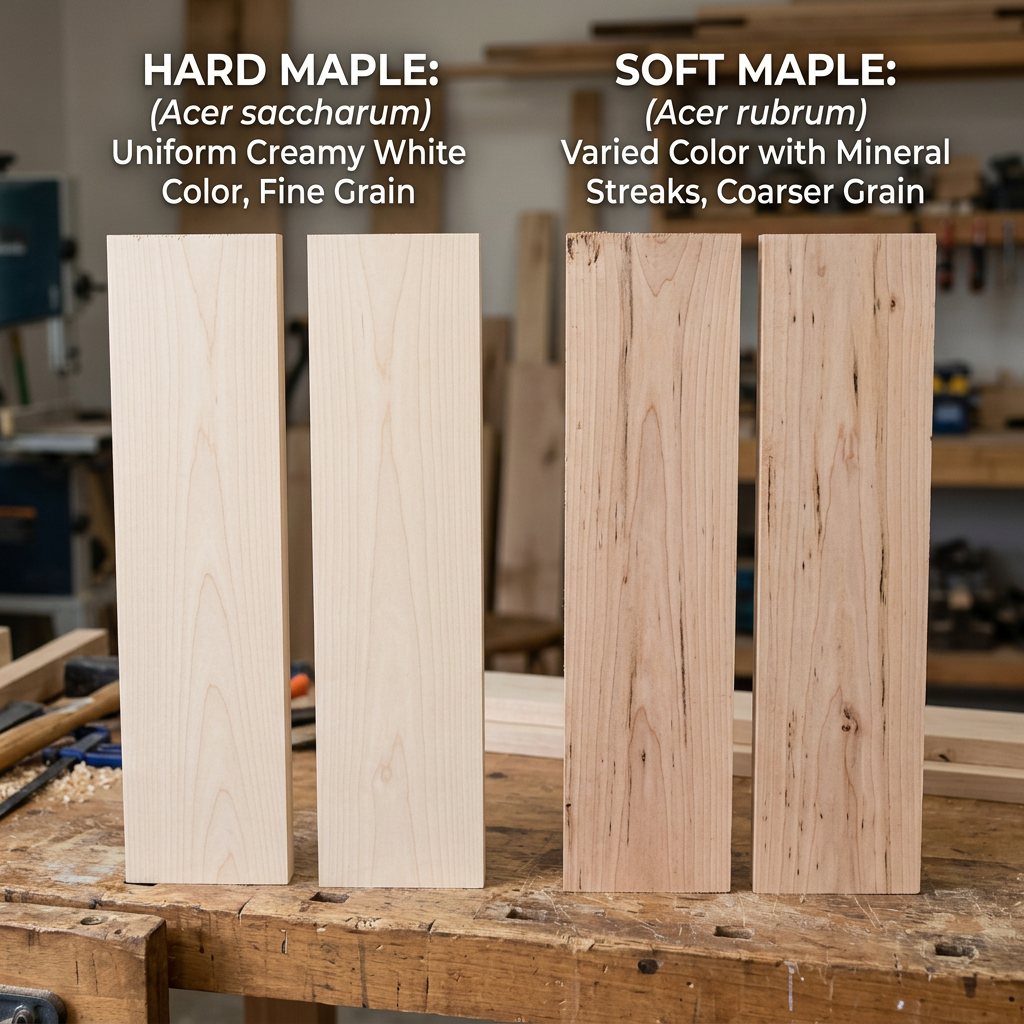
Hard Maple (Acer saccharum)
Also called Sugar Maple or Rock Maple.
- •Janka Hardness: 1,450 lbf
- •Density: 44 lb/ft³
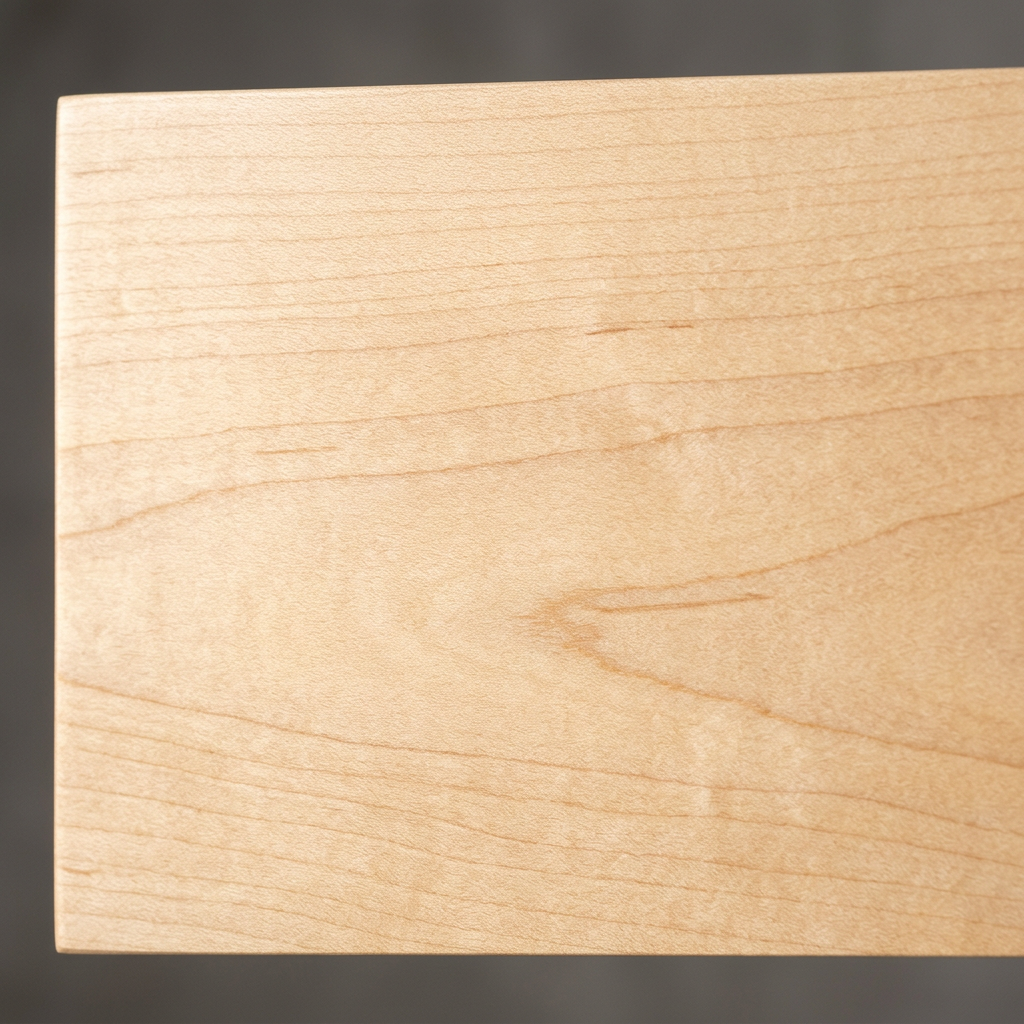
- •Color: Cream to light amber, heartwood slightly darker
- •Grain: Fine, uniform, closed
- •Figure: Can exhibit curly, bird's eye, or quilted figure
- •Workability: Moderate — hard on tools, can burn when machining
Soft Maple (Multiple Species)
The "soft maple" designation includes several species:
Red Maple (Acer rubrum) — Most common soft maple
- •Janka Hardness: ~950 lbf
- •Density: ~38 lb/ft³
Silver Maple (Acer saccharinum)
- •Janka Hardness: ~700 lbf
- •Density: ~33 lb/ft³
Bigleaf Maple (Acer macrophyllum)
- •Janka Hardness: ~850 lbf
- •Density: ~34 lb/ft³
- •Notable: Often has exceptional figure (quilted, curly)
Key Differences
| Property | Hard Maple | Soft Maple |
|---|---|---|
| Hardness | 1,450 lbf | 700-950 lbf |
| Weight | 44 lb/ft³ | 33-38 lb/ft³ |
| Color | Cream/white | Slightly darker, may have gray |
| Staining | Blotchy — requires pre-treatment | Also blotchy but slightly better |
| Workability | Harder on tools | Easier to machine |
| Price | Higher | 20-40% less |
| Flooring use | Excellent | Adequate for light traffic |
How to Tell Them Apart
Weight Test
The most reliable field test. Pick up boards of each — hard maple is noticeably heavier. With practice, you can distinguish them by weight alone.
End Grain
Hard Maple tends to have more uniformly tiny, densely packed pores. Soft Maple may show slightly more variation.
Appearance
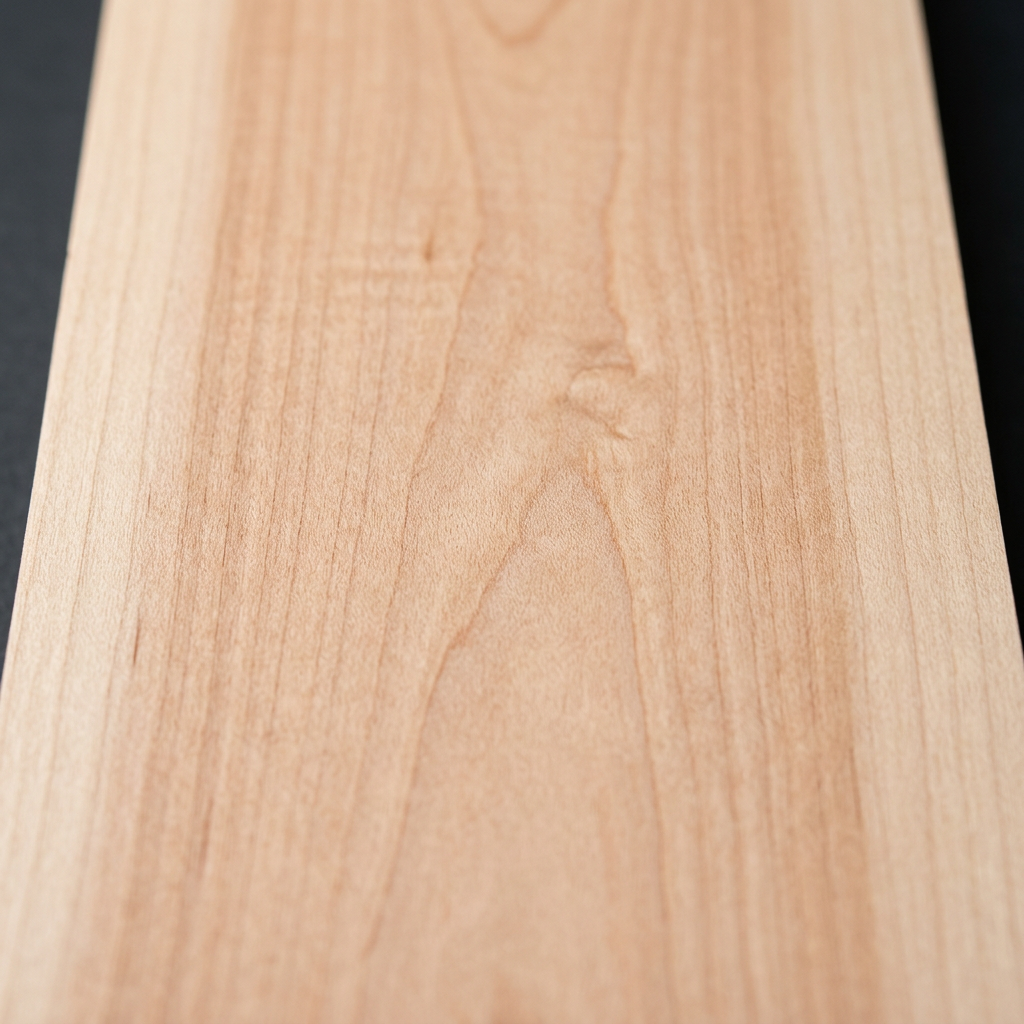
Soft Maple often has a slightly grayer or more reddish tone. Hard Maple tends to be cleaner white/cream. However, there's enough overlap that color alone isn't reliable.
When to Choose Each
Choose Hard Maple For:
- •Flooring (especially high-traffic areas)
- •Butcher blocks and cutting boards
- •Bowling alleys and sports surfaces
- •Any application demanding wear resistance
- •When you need maximum hardness
Choose Soft Maple For:
- •Painted furniture and cabinetry (why pay for hardness you'll cover with paint?)
- •Cabinet interiors and drawer sides
- •Light-duty furniture
- •Budget-conscious projects where appearance matters more than hardness
- •Figured/decorative applications (Bigleaf Maple burl and figure)
The Price Advantage
Soft Maple typically costs 20-40% less than Hard Maple. For many applications — particularly painted pieces — this savings is significant with no practical downside.