
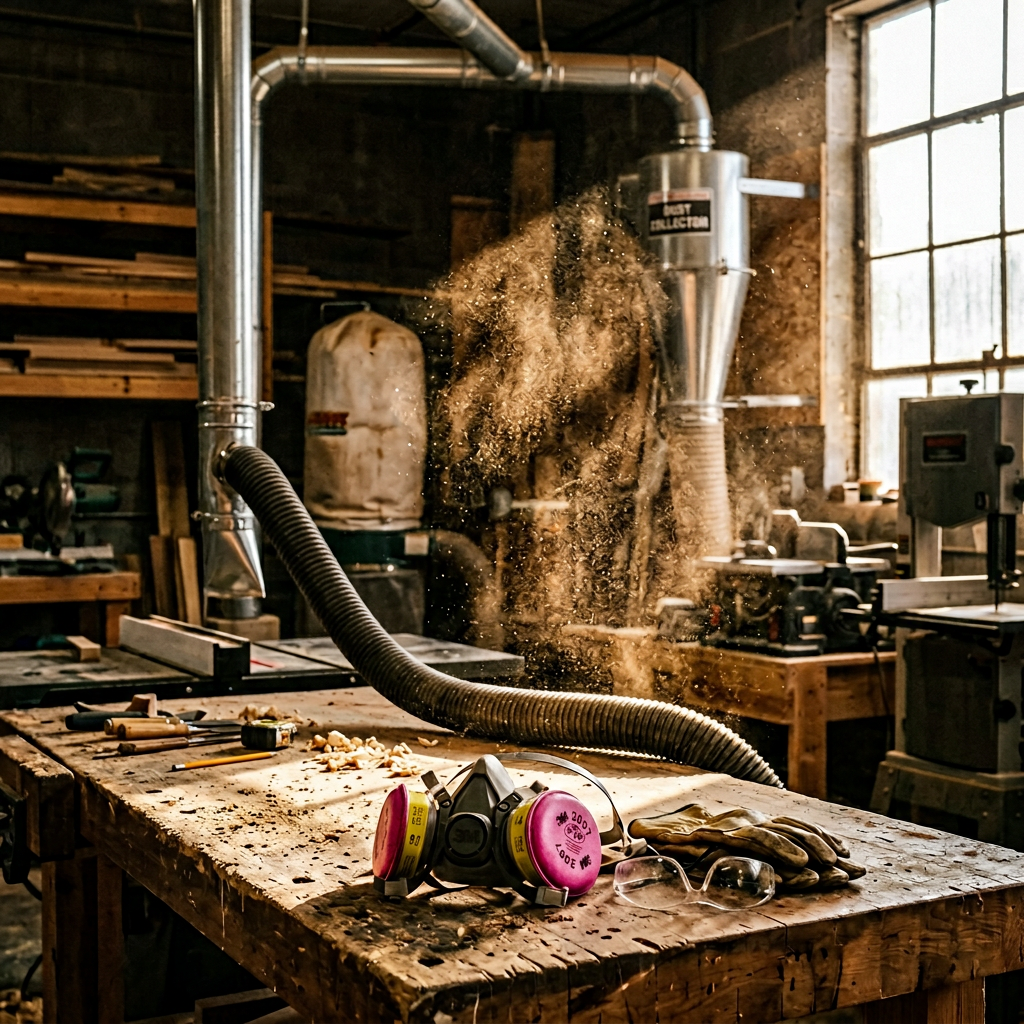
The Invisible Hazard
Wood dust is classified as a Group 1 carcinogen by the International Agency for Research on Cancer (IARC). Long-term exposure to wood dust is associated with nasal and sinus cancers, and chronic respiratory disease. This isn't theoretical — it's a well-documented occupational hazard.
The good news: with proper precautions, the risks are manageable.
Health Risks of Wood Dust
Short-Term Effects
- •Sneezing, coughing, runny nose
- •Eye irritation
- •Skin irritation (some species)
- •Asthma attacks in sensitive individuals
Long-Term Effects
- •Nasal cancer (primarily adenocarcinoma) — especially hardwood dust
- •Chronic obstructive pulmonary disease (COPD)
- •Occupational asthma — can develop after months or years of exposure
- •Allergic sensitization — developing allergies to species you previously tolerated
Particle Size Matters
- •Visible dust (>100 microns): Settles quickly, less dangerous
- •Respirable dust (<10 microns): Stays airborne for hours, penetrates deep into lungs
- •Fine dust (<2.5 microns): The most dangerous — reaches the deepest lung tissue
The finest particles are invisible and remain suspended in your shop air long after you stop making dust.
Protection Strategy: The Three Layers
Layer 1: Source Capture (Dust Collection)
Capture dust where it's created:
- •Table saw, jointer, planer: Connect to a dust collector (minimum 400 CFM at the tool)
- •Router, sander: Use vacuum-attached dust ports
- •Lathe: Use a face shield with filtered air supply or position collector near work
Layer 2: Ambient Air Filtration
Filter the air in your shop:
- •Ceiling-mounted air filtration units — Run during and after work (fine particles stay airborne for hours)
- •Rule of thumb: An air cleaner should cycle your shop's air volume at least 6 times per hour
Layer 3: Personal Protection
Protect your lungs directly:
| Protection Level | Filter Type | Best For |
|---|---|---|
| Dust mask (N95) | N95 | Light sanding, occasional work |
| Half-face respirator | P100 | Regular woodworking |
| Full-face respirator | P100 + OV | Exotic woods, finishing |
| PAPR | HEPA | Maximum protection, daily professional use |
Minimum recommendation: A well-fitted half-face respirator with P100 filters for any woodworking that produces fine dust.
Exposure Limits
OSHA limits for wood dust:
- •Hardwood dust: 5 mg/m³ (8-hour average)
- •Western Red Cedar: 2.5 mg/m³
- •Softwood dust: 5 mg/m³
Many occupational health experts recommend targeting well below these limits.
Practical Tips
- •Don't sweep — sweeping makes dust airborne. Vacuum or wet-mop instead.
- •Run your air cleaner after you stop working — fine dust stays airborne for 4-8 hours
- •Don't use compressed air for cleanup — it creates a dust cloud
- •Change clothes before going inside — you carry dust on your clothing
- •Wash your hands and face before eating or drinking
- •Shower after heavy dust sessions — especially with exotic species
- •Replace filters regularly — a clogged filter doesn't protect you
The Bottom Line
Wood dust is a real health hazard that deserves respect. Invest in good dust collection, a quality respirator, and air filtration. Your lungs will thank you in 20 years.