Black Walnut
Juglans nigra
Family: Juglandaceae
Quick Facts
Wood Type
Hardwood
Native Range
North America
Avg. Dried Weight
38 lb/ft³
Janka Hardness
1,010 lbf
Decay Resistance
Durable
Typical Color
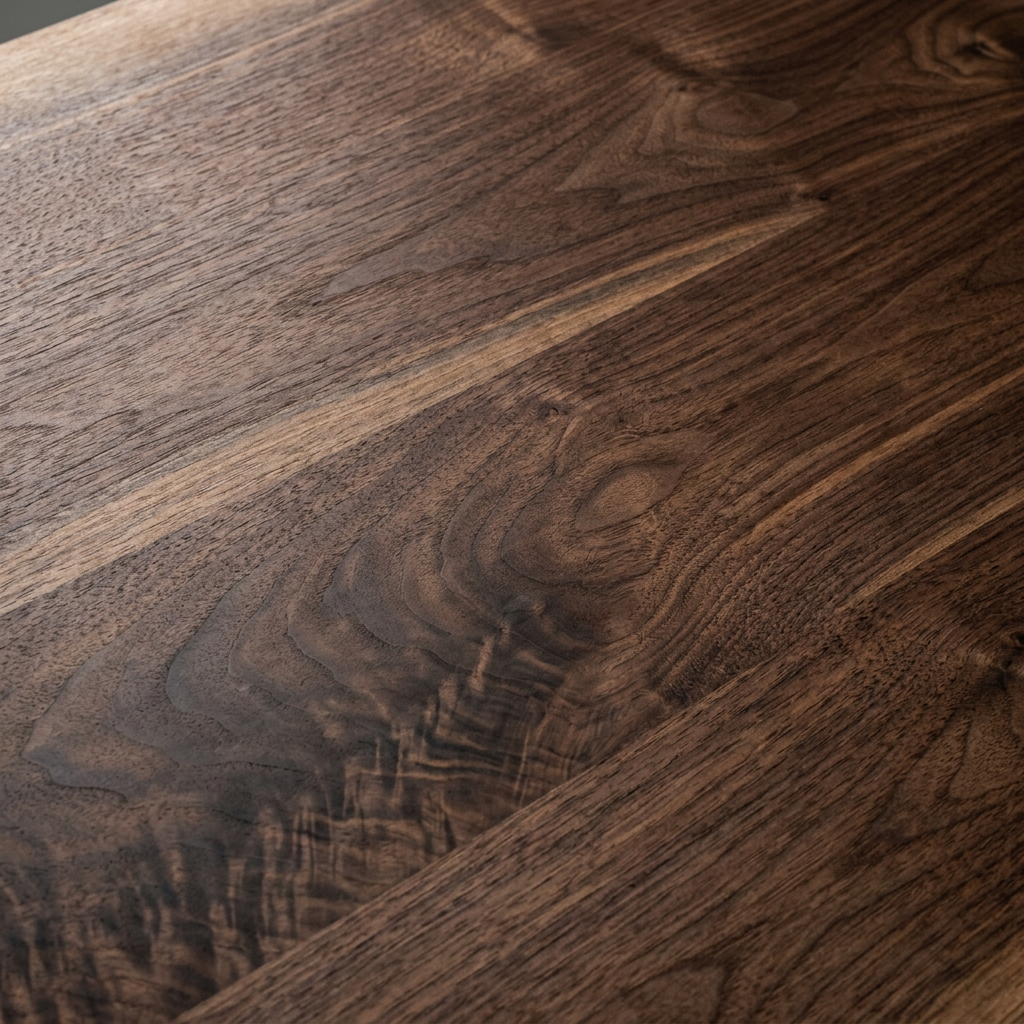
Dark Brown
Stability
High
Outdoor Suitability
Fair
Workability
Easy
Availability
Commercially Available
CITES
Unlisted
IUCN
Least Concern
Did You Know?
- •Black Walnut is harder than 37% of the 137 species in our database.
- •With a T/R ratio of 1.42, Black Walnut shrinks very uniformly — meaning less warping and cupping during seasonal moisture changes.
- •Black Walnut can produce both figured and burl wood, making select pieces highly prized by turners and veneer collectors.
Janka Hardness Scale
Medium
Overview
Professional Summary
Black Walnut (Juglans nigra) is America's most prestigious domestic hardwood, prized for its rich chocolate-brown heartwood, excellent workability, and dimensional stability. At 1,010 lbf Janka, it offers moderate hardness with outstanding machining characteristics, making it the gold standard for fine American furniture, gunstocks, and cabinetry.
In Plain English
Black Walnut is the king of American hardwoods — that gorgeous dark chocolate-brown wood you see on heirloom furniture, fine gun stocks, and high-end kitchen tables. It works like a dream, looks spectacular with a simple oil finish, and only gets more beautiful with age.
Appearance
Technical Properties
Movement Predictor
Estimate how much a Black Walnut board changes width as moisture content changes.
+0.100 in (2.55 mm)
Linear estimate using tangential shrinkage (7.8%, green to oven-dry) and a 28% fiber saturation point. Real movement varies by board, finish, and grain; not a design value.
Sources, Conditions & Safety
Sources checked: 2026-09-30. This is not independent testing or certification.
Measurement conditions
Clear, straight-grained small specimens per USDA FPL testing. Strength and hardness values at 12% moisture content; specific gravity on green-volume basis at the stated moisture content; shrinkage from green to oven-dry, as a percentage of green dimension. Averages — individual boards vary.
Specific gravity, strength, stiffness, compression, hardness, and shrinkage values were checked against the USDA Wood Handbook tables listed on this date. T/R ratio is calculated from the tabulated shrinkage values; metric displays are unit conversions. Average dried weight, the safety note, descriptions, ratings, conservation listings, and images are not covered by these sources and remain unverified.
- Wood Handbook (2021), Chapter 5: Mechanical properties of wood — Table 5-3b
Primary reference · USDA Forest Service, Forest Products Laboratory · Accessed 2026-09-30
Supports: Row "Walnut, black": specific gravity (green-volume basis, green and 12% MC), modulus of rupture, modulus of elasticity, compression parallel to grain, and side hardness at 12% moisture content.
- Wood Handbook (2021), Chapter 4: Moisture relations and physical properties of wood — Table 4-3
Primary reference · USDA Forest Service, Forest Products Laboratory · Accessed 2026-09-30
Supports: Row "Walnut, black": radial, tangential, and volumetric shrinkage from green to oven-dry. T/R ratio derived from these values.
Wood dust & sensitivity
Published woodworking references report black walnut as a sensitizer, including reported eye and skin irritation. These notes concern exposure while working the wood, not food-contact certification.
Use dust extraction and appropriate protective equipment; consult occupational-safety guidance. This is not medical advice or food-contact approval.
Durability & Performance
Workability
Common Uses
The premier American furniture wood. Also the standard for gunstocks, cabinetry, musical instruments, turning, and high-end millwork.
Sustainability & Trade
Listings are reference information, not proof of legal sourcing or certification. Verify current trade rules and supplier documentation before buying; absence of a note does not mean unrestricted trade.
Only moderately durable outdoors. Expensive — especially wide, clear boards. Sapwood color contrast can be dramatic and unwanted.
Native Distribution
Find Substitutes
AI-powered alternative species matching
You Might Also Consider
Species with similar characteristics and uses
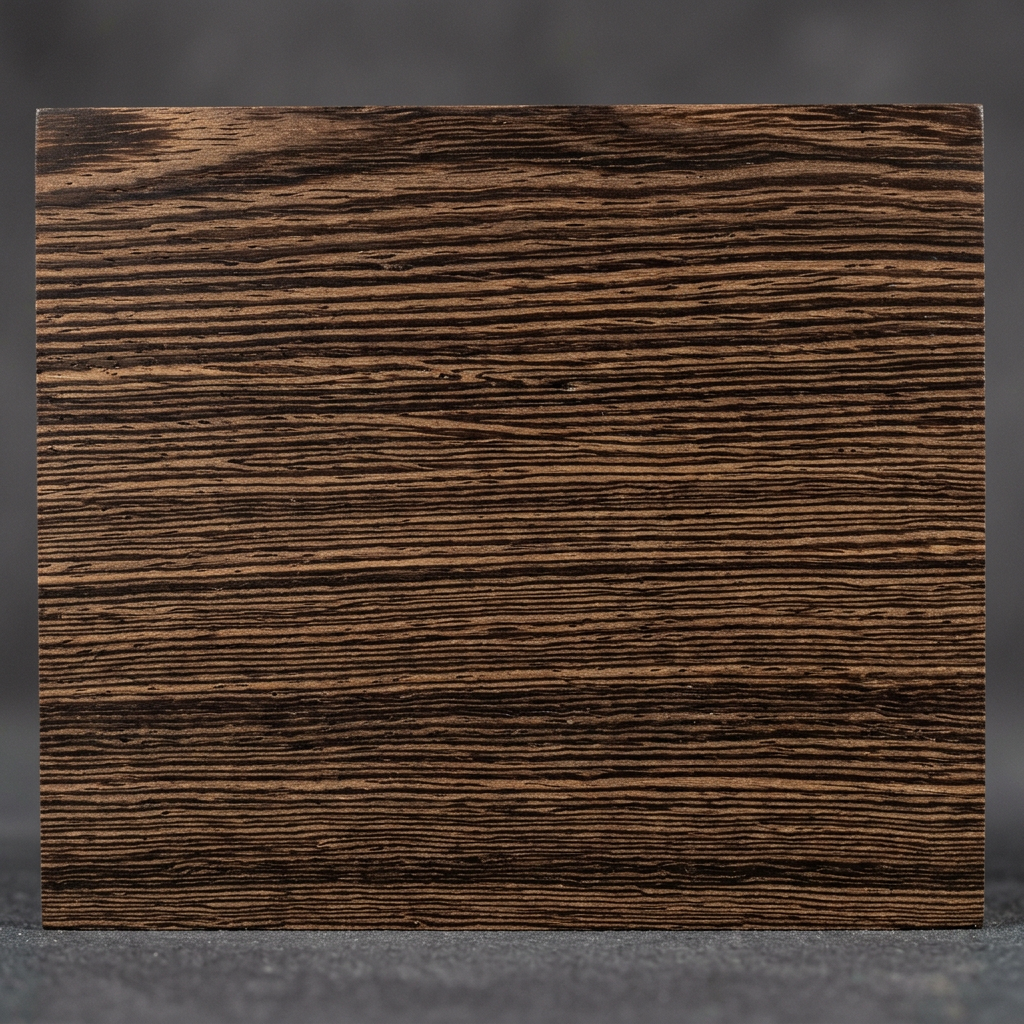
Look-Alike Species
Woods with a similar dark brown color that are easily confused with Black Walnut. Recorded differences are shown where data exists; confirm identification with end-grain examination.
- • Harder (Janka 3,360 lbf)
- • Heavier (68 lb/ft³)
- • Decay: Very Durable
- • Texture: Medium to coarse
- • Harder (Janka 2,250 lbf)
- • Heavier (61 lb/ft³)
- • Decay: Very Durable
- • Harder (Janka 2,440 lbf)
- • Heavier (52 lb/ft³)
- • Decay: Very Durable
- • Texture: Medium to coarse
- • Harder (Janka 3,510 lbf)
- • Heavier (69 lb/ft³)
- • Decay: Very Durable
- • Texture: Fine to medium