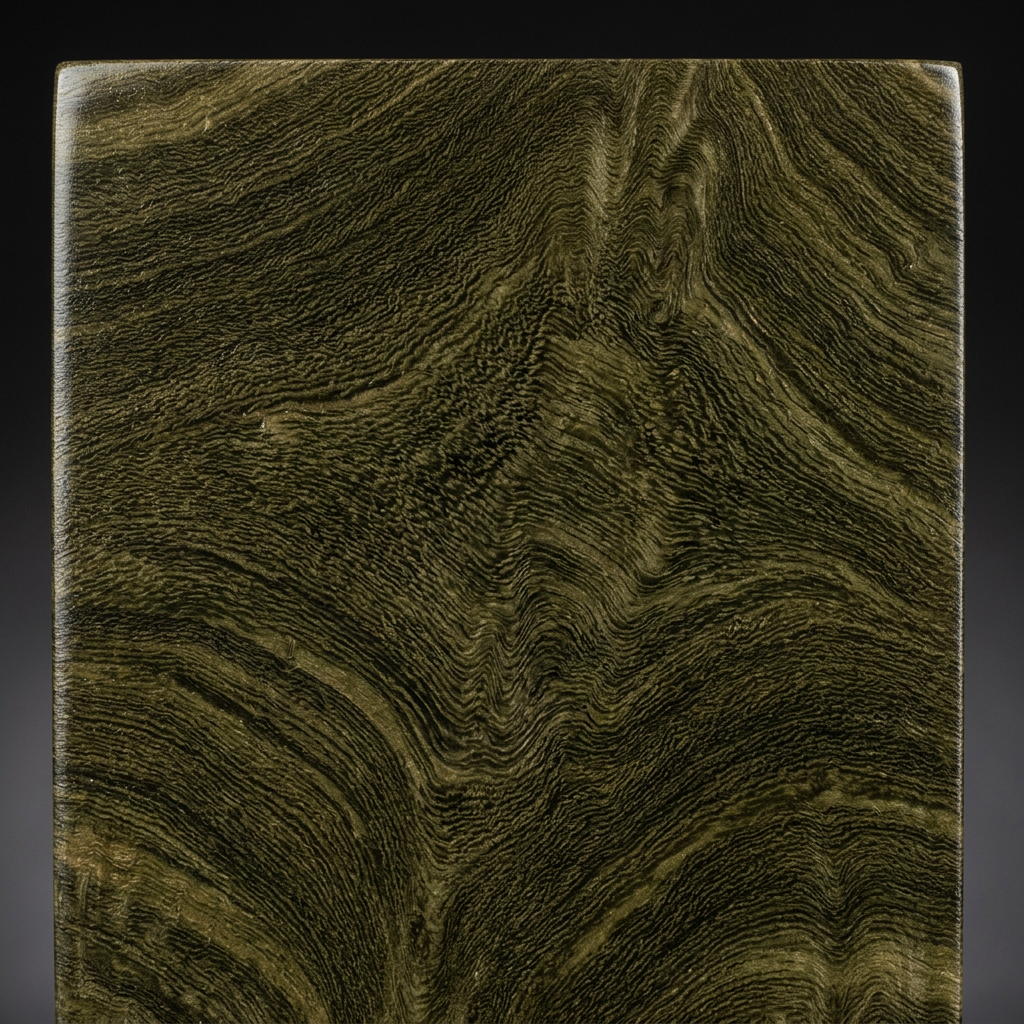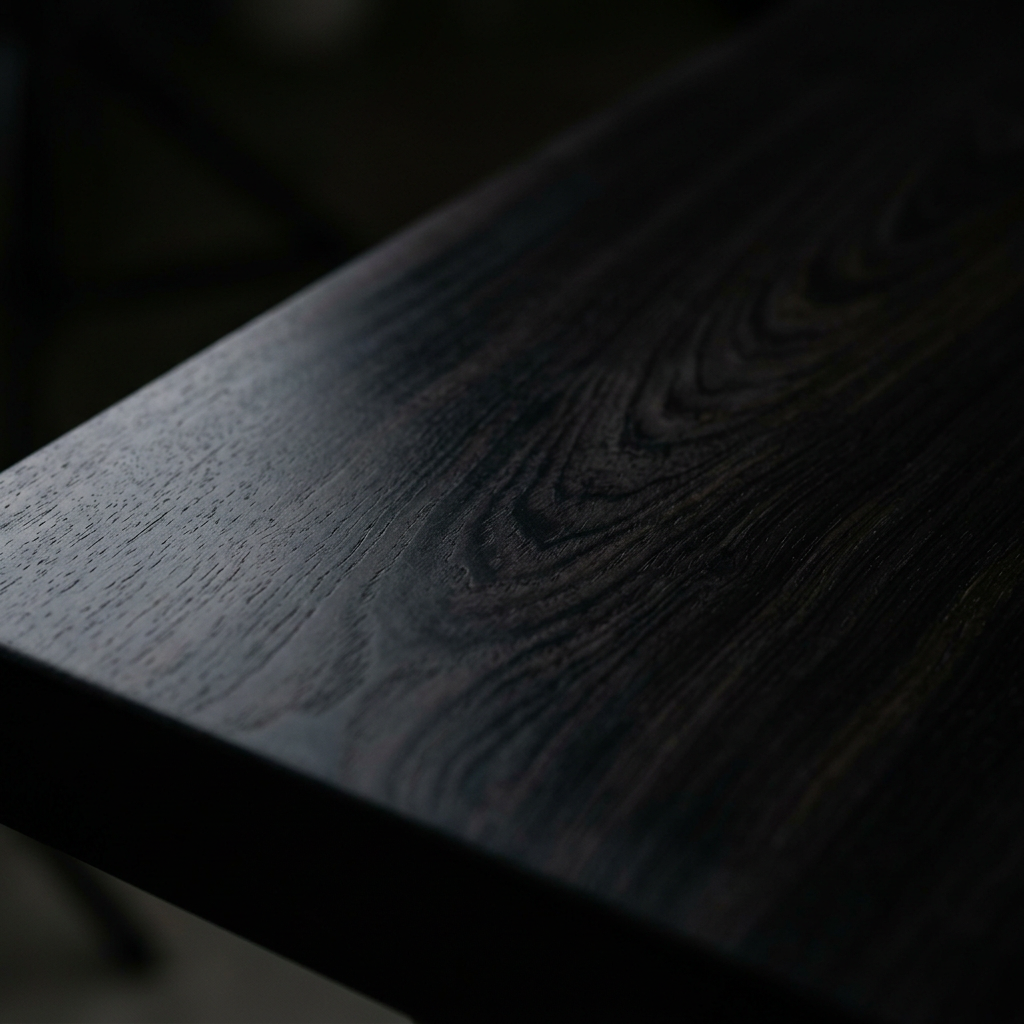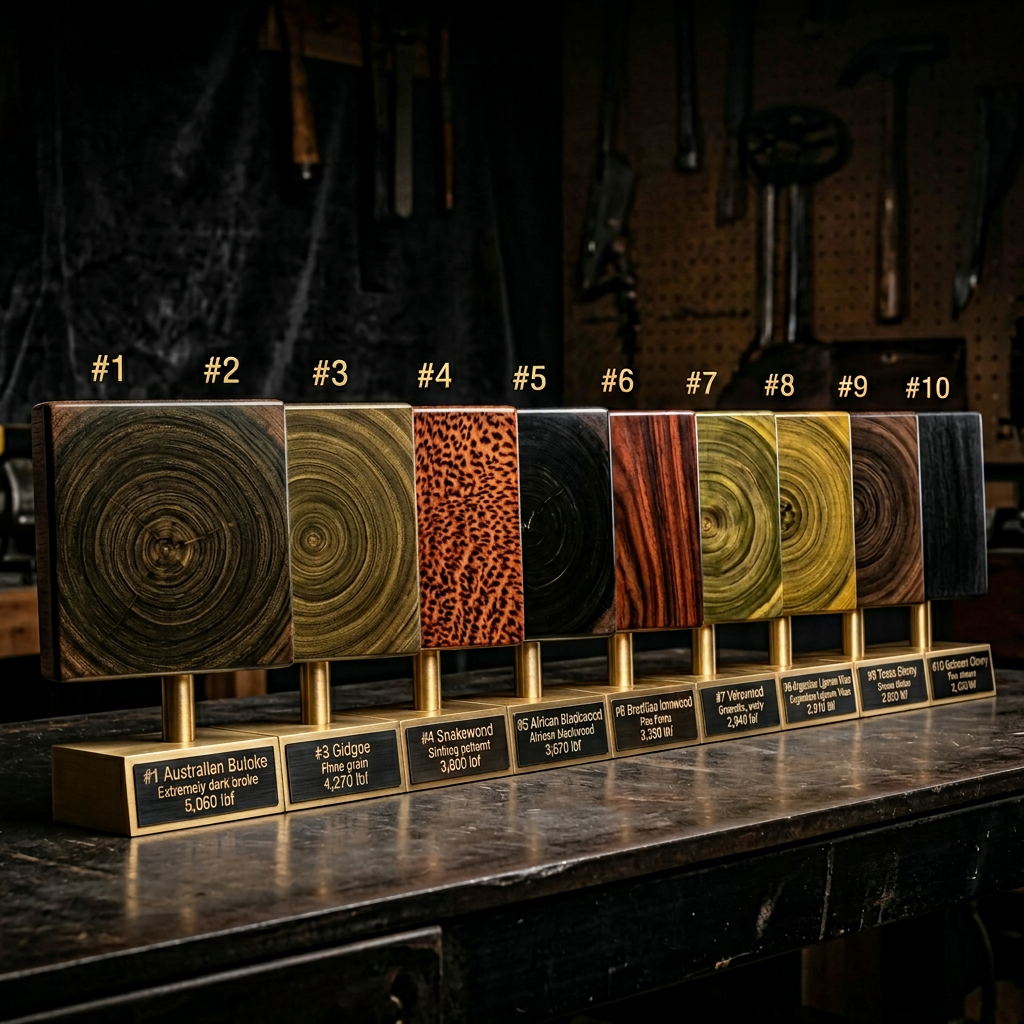
Beyond the Usual Suspects
Most woodworkers are familiar with oak, walnut, maple, and cherry. But the world of wood extends far beyond these staples. Here are 10 extraordinary species that deserve a place in your awareness — and maybe in your shop.
1. Lignum Vitae (Guaiacum officinale)
The self-lubricating wood. Lignum Vitae is so dense it sinks in water (specific gravity ~1.25) and so oily it literally lubricates itself. It was historically used for ship propeller shaft bearings — running underwater without any added lubrication. The U.S. Navy used Lignum Vitae bearings in submarine propeller shafts through the 1960s.
- •Janka Hardness: 4,500 lbf — one of the hardest woods on Earth
- •Fun fact: The name means "wood of life" in Latin, from its historical medicinal uses
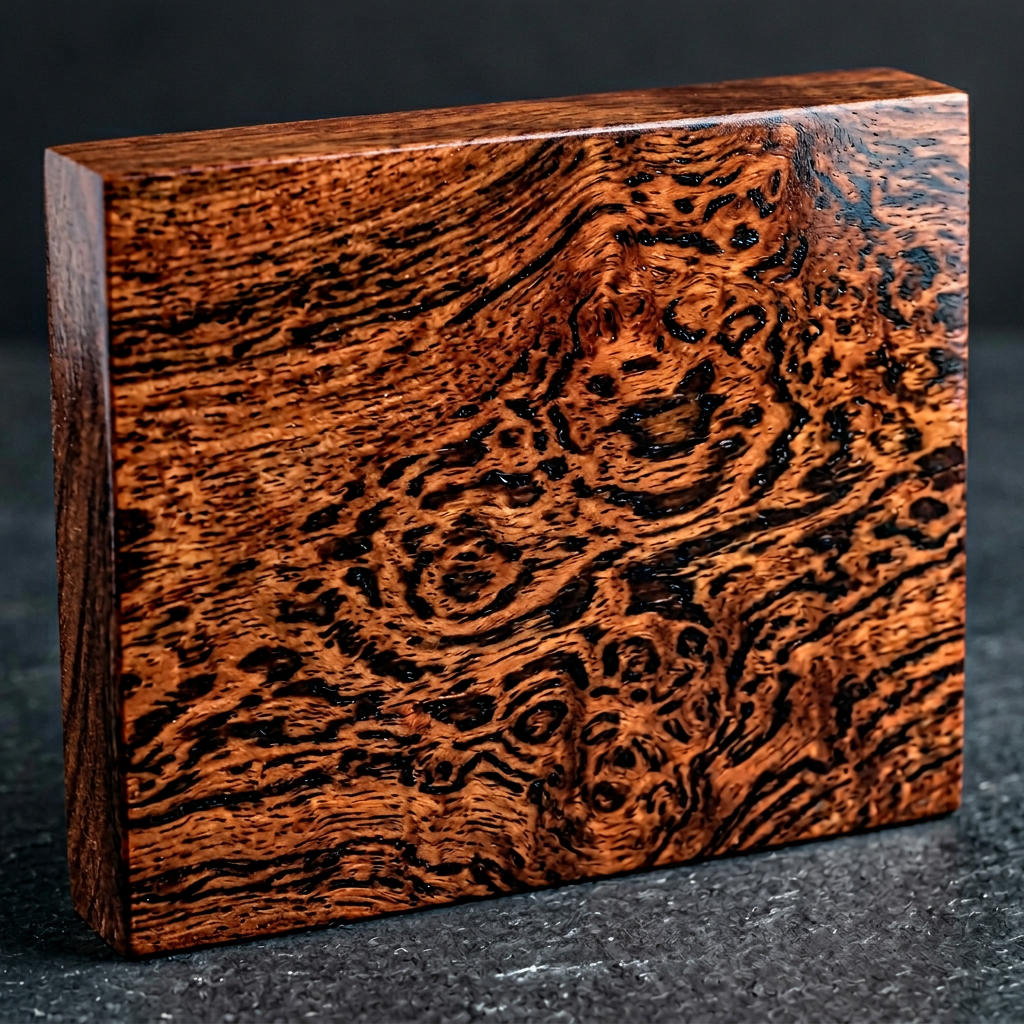
2. Snakewood (Brosimum guianense)
The most expensive wood. Snakewood's namesake snake-skin pattern makes it one of the most visually striking — and costly — woods available. Premium pieces can sell for $200-400 per board foot or more.
- •Where: South America (Suriname, French Guiana, Brazil)
- •Notable: Extremely hard and dense, used for luxury items, violin bows, and jewelry
3. Pink Ivory (Berchemia zeyheri)
Rarer than diamonds — at least according to Zulu tradition, where only royalty could possess this vivid pink wood. The vibrant color is natural and deepens with UV exposure.
- •Where: Southern Africa (South Africa, Zimbabwe, Mozambique)
- •Color: Bright pink to deep rose-red
- •Uses: Turning, inlays, knife handles, pool cues
4. Osage Orange (Maclura pomifera)
America's most underrated wood. This domestic species is harder than most exotics (Janka 2,040 lbf), naturally rot-resistant, and glows brilliant golden-yellow when freshly cut. Native Americans prized it for making bows — hence its other name, "bois d'arc" (bow wood).
- •Where: Central United States
- •Secret: Often available for free as fence posts or firewood, yet it rivals many expensive exotics
5. Kingwood (Dalbergia cearensis)
The king's wood. Named because it was allegedly the favorite wood of Louis XIV and Louis XV of France, Kingwood features stunning violet-black streaks on a dark brown base.
- •Where: Brazil
- •Note: As a Dalbergia, it's CITES Appendix II regulated
6. Marblewood (Zygia racemosa)
Nature's abstract art. Marblewood has a bold, irregular pattern of dark brown to black streaks on a golden-yellow background that looks like marble or modern abstract painting.
- •Where: South America
- •Challenge: Very hard and can be difficult to work, but the visual payoff is stunning
7. Paulownia (Paulownia tomentosa)
The fastest-growing hardwood on Earth. Paulownia can grow 10-15 feet per year and is remarkably light — about the same weight as balsa. Despite its lightness, it has surprising strength-to-weight ratio and excellent dimensional stability.
- •Where: Originally East Asia, now widely planted worldwide
- •Uses: Surfboards, Japanese tansu chests, musical instrument soundboards
8. Ziricote (Cordia dodecandra)
Spider web grain. Ziricote features dramatic "spider web" or "landscape" patterns in its dark brown to near-black heartwood. When bookmatched, the patterns can look like aerial photographs of canyons.
- •Where: Central America and Mexico
- •Uses: Guitar backs and sides, furniture, turning
9. Yellowheart (Euxylophora paraensis)
Vivid natural yellow. While many woods claim to be "yellow," Yellowheart delivers — a bright, saturated yellow that doesn't require any stain or dye.
- •Where: Brazil
- •Note: The color does mellow somewhat with age but remains distinctly yellow
10. Desert Ironwood (Olneya tesota)
Harder than steel (in some measures). Desert Ironwood is so dense and hard that it can actually dull high-speed steel tooling rapidly. It's found only in the Sonoran Desert and is prized by knife makers for handles.
- •Janka: Estimated 3,260+ lbf
- •Where: Sonoran Desert (Arizona, Mexico)
- •Fun fact: Dead desert ironwood can persist for over 1,000 years without decaying
Honorable Mentions
- •Bloodwood — Brilliant red, bleeds red sap when cut
- •Lacewood — Named for its lace-like ray fleck pattern
- •Mun Ebony — Vietnamese ebony with dramatic streaking
- •Amboyna Burl — Possibly the most valuable burl wood, from Southeast Asia
The world of wood is vast and endlessly fascinating. These species represent just a fraction of the thousands of tree species that produce beautiful, workable timber.