The World's Hardest Woods
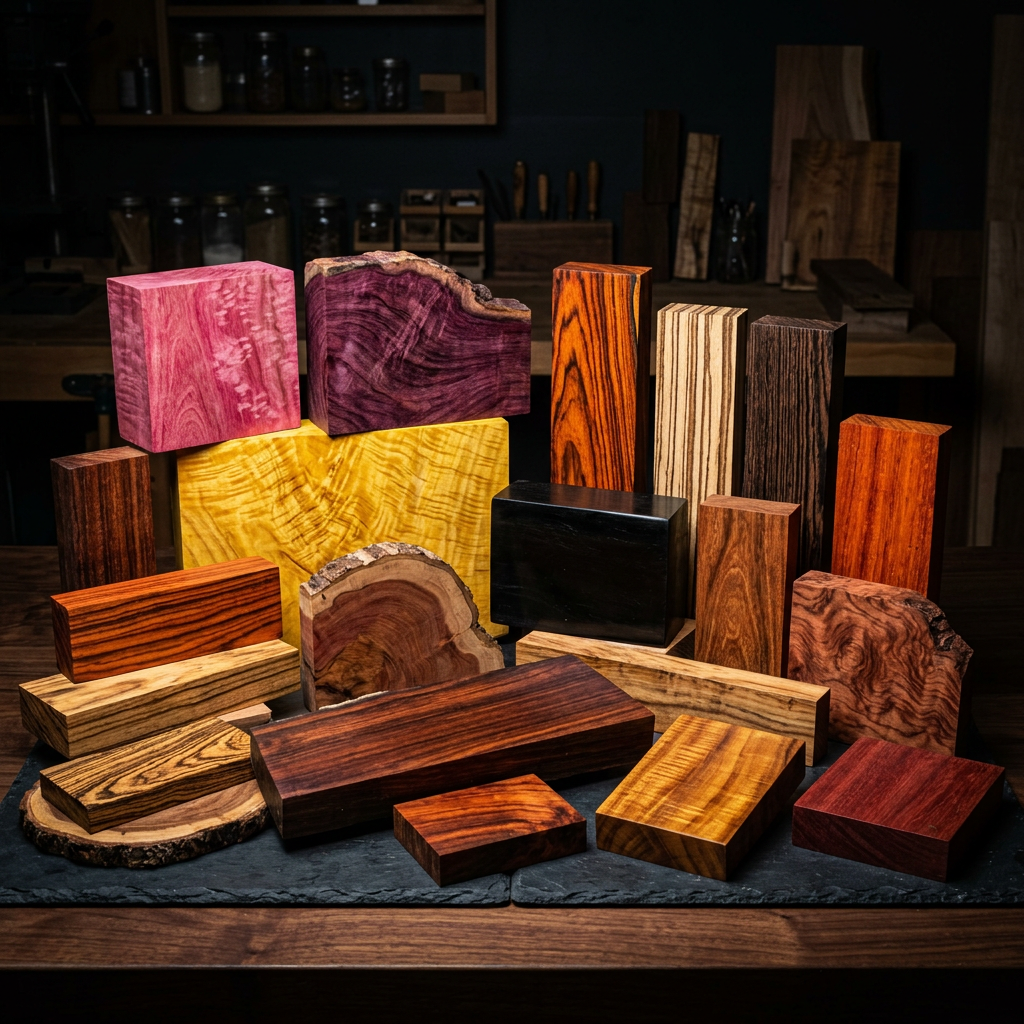
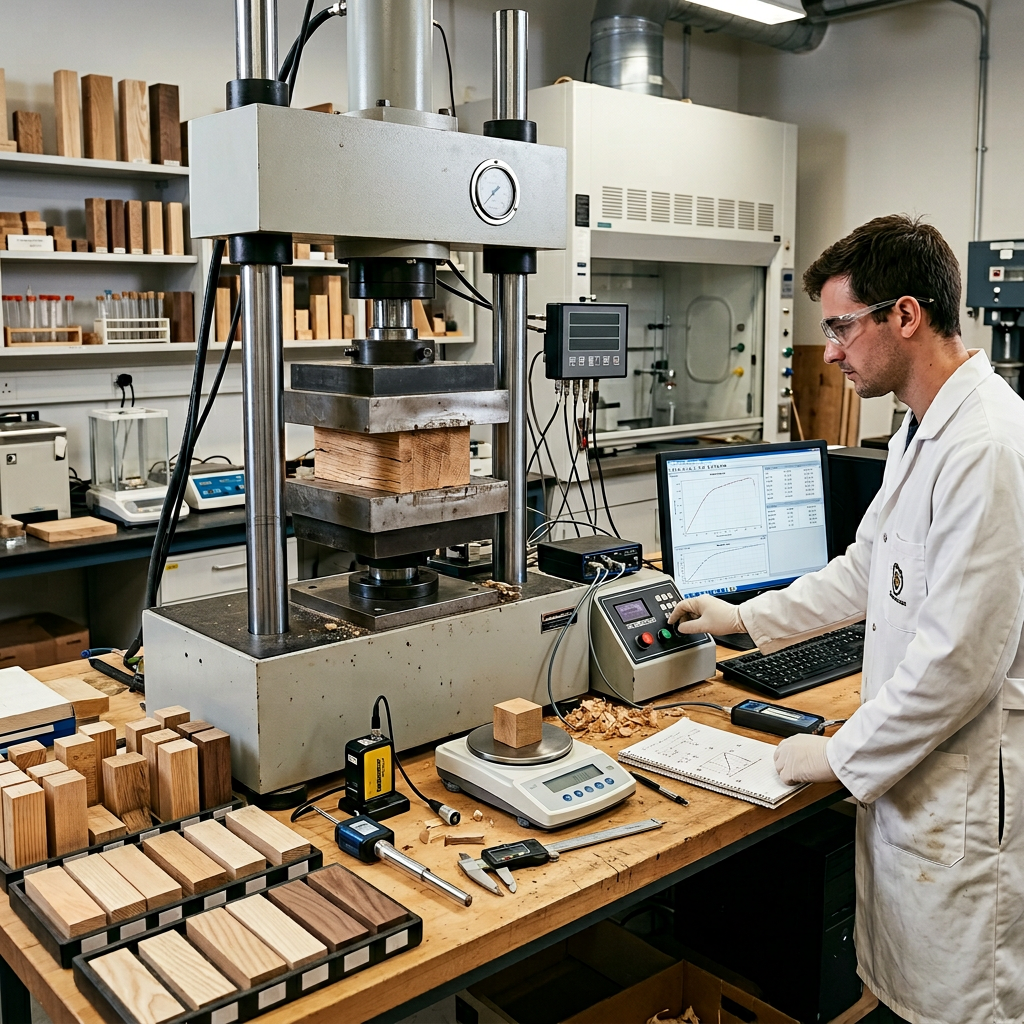
Janka hardness measures a wood's resistance to denting by measuring the force needed to embed a steel ball into the surface. While most common woodworking species range from 300 to 2,000 lbf, the world's hardest woods push into extreme territory.
For reference, Red Oak (the standard American benchmark) rates 1,290 lbf.
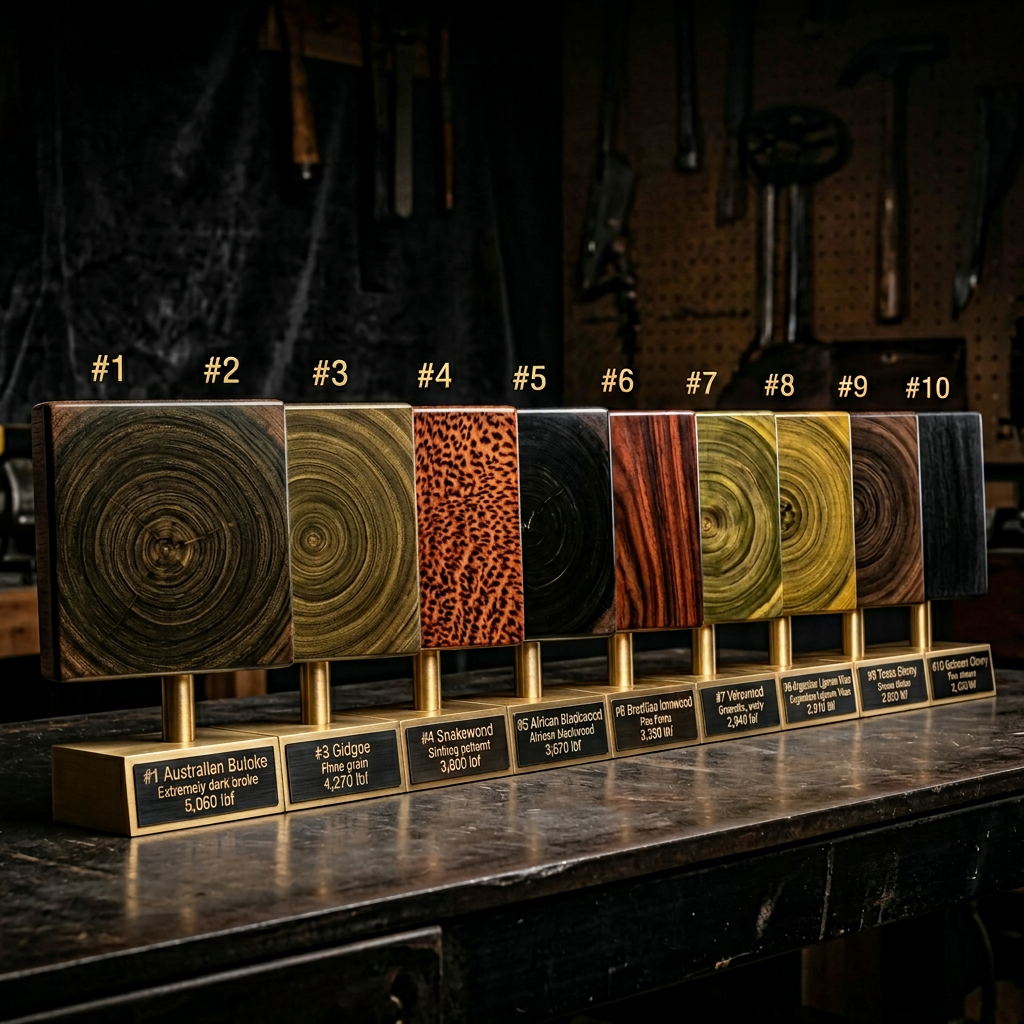
The Top 10
1. Australian Buloke (Allocasuarina luehmannii)
Janka Hardness: ~5,060 lbf
The undisputed champion. This small Australian tree produces wood so hard it's almost unworkable with standard tools. It's rarely seen outside Australia and is primarily used for turned objects when available.
2. Lignum Vitae (Guaiacum officinale/sanctum)
Janka Hardness: ~4,500 lbf
Perhaps the most famous of the super-hard woods. Lignum Vitae is also one of the densest woods on Earth (sinks readily in water) and is naturally self-lubricating due to its high resin content. Historically used for ship propeller bearings.
3. Snakewood (Brosimum guianense)
Janka Hardness: ~3,800 lbf
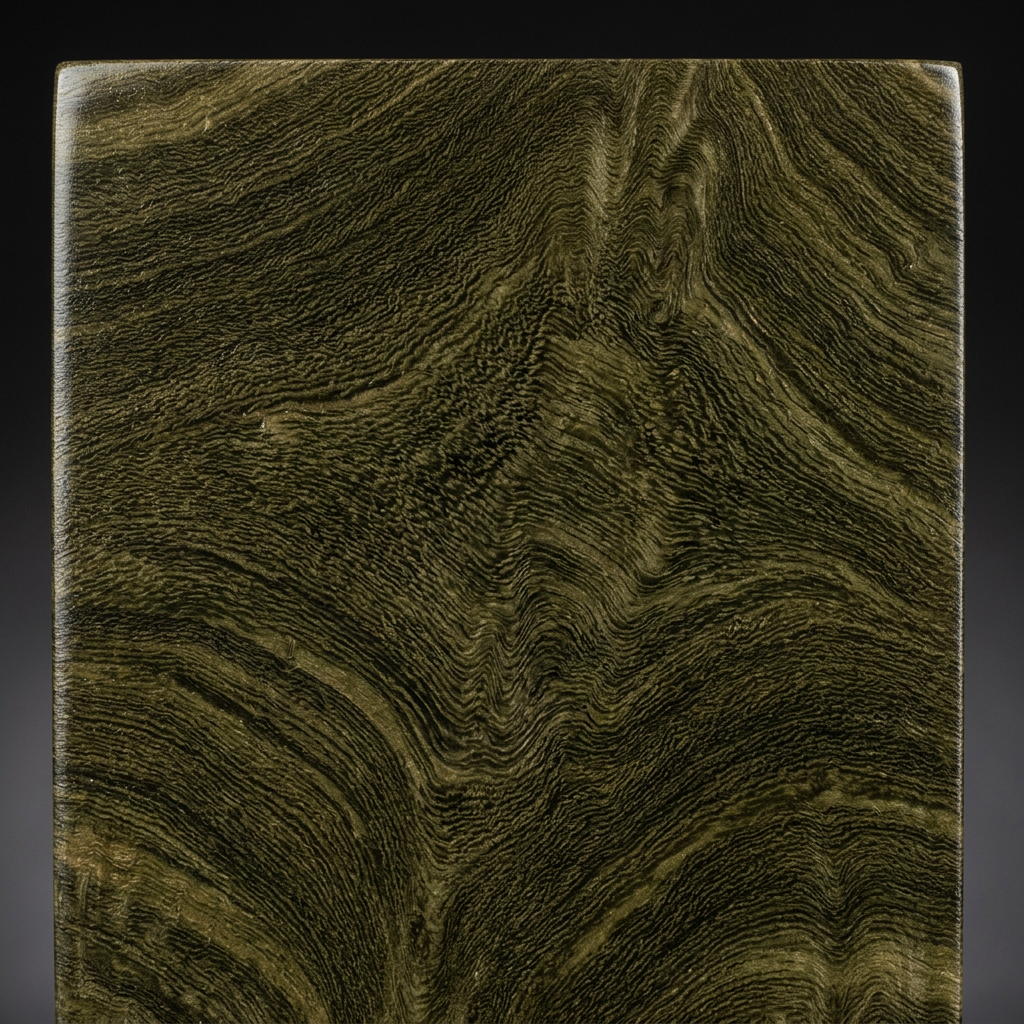
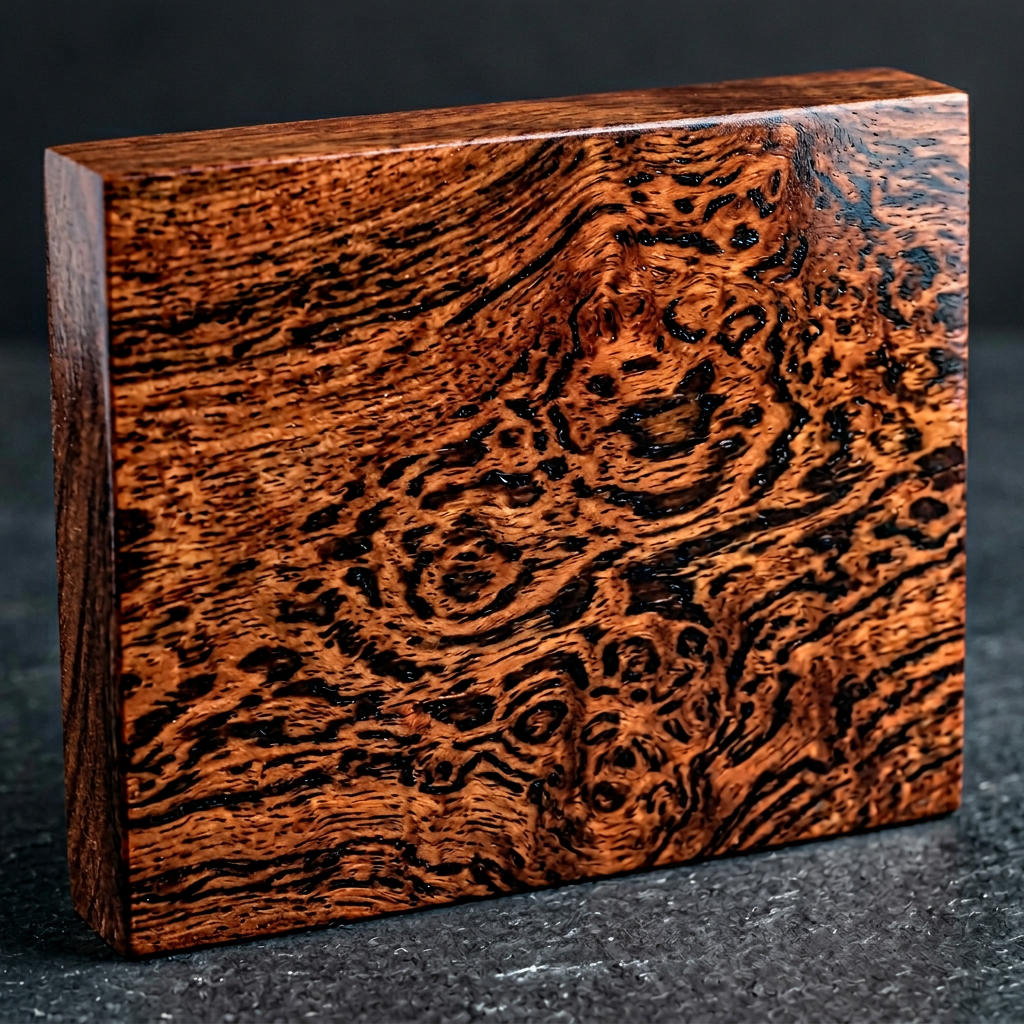
Beyond being extraordinarily hard, Snakewood features one of the most distinctive grain patterns in the wood world — resembling snakeskin. It's also one of the most expensive commercial timbers.
4. Quebracho (Schinopsis balansae)
Janka Hardness: ~3,700 lbf
The name literally means "axe breaker" in Spanish. This South American species is so hard that it was famously used for railroad ties where no other wood could withstand the abuse.
5. Ipê / Lapacho (Handroanthus spp.)
Janka Hardness: ~3,510 lbf
The most commercially relevant species on this list. Ipê is widely used for premium decking and outdoor furniture, where its extraordinary hardness translates to decades of service.
6. Desert Ironwood (Olneya tesota)
Janka Hardness: ~3,260 lbf
Found only in the Sonoran Desert, this slow-growing tree produces wood prized by knife makers. Dead wood can persist for over 1,000 years without rotting.
7. Ebony, Gaboon (Diospyros crassiflora)
Janka Hardness: ~3,080 lbf
The jet-black icon. Beyond its famous color, ebony's extreme hardness makes it ideal for piano keys, fingerboards, and other applications demanding wear resistance.
8. African Blackwood (Dalbergia melanoxylon)
Janka Hardness: ~2,940 lbf
The premier wood for clarinets, oboes, and bagpipes. Its combination of hardness, density, and acoustic properties is unmatched for musical instruments.
9. Verawood (Bulnesia arborea)
Janka Hardness: ~2,710 lbf
Sometimes called "Argentine Lignum Vitae" (though botanically unrelated), Verawood shares many properties with true Lignum Vitae including extreme density and oiliness.
10. Katalox (Swartzia cubensis)
Janka Hardness: ~2,650 lbf
A dark Central American hardwood gaining popularity as a more sustainable alternative to ebony. Its deep purple-black heartwood and extreme hardness make it a functional substitute.
Working with Extremely Hard Woods
- •Use carbide tools — HSS dulls almost instantly
- •Pre-drill all holes — nails and screws will bend or snap
- •Go slow — forcing cuts causes burning and tool damage
- •Use sharp blades — dull tools + hard wood = dangerous kickback
- •Expect tool wear — budget for blade replacements
Perspective
For most woodworking, extreme hardness is unnecessary and counterproductive. A 1,300 lbf oak floor will last generations with proper care. The ultra-hard exotics above are fascinating materials, but they're specialty tools for specialty applications.
Explore our interactive hardness charts to compare any species.