Why Mechanical Properties Matter
When selecting wood for a project, appearance gets most of the attention. But understanding a species' mechanical properties — its hardness, strength, stiffness, and density — is what separates good project outcomes from disappointing ones.
A beautiful tabletop that dents from normal use, or a shelf that sags under load, results from ignoring mechanical properties.
Key Properties Explained
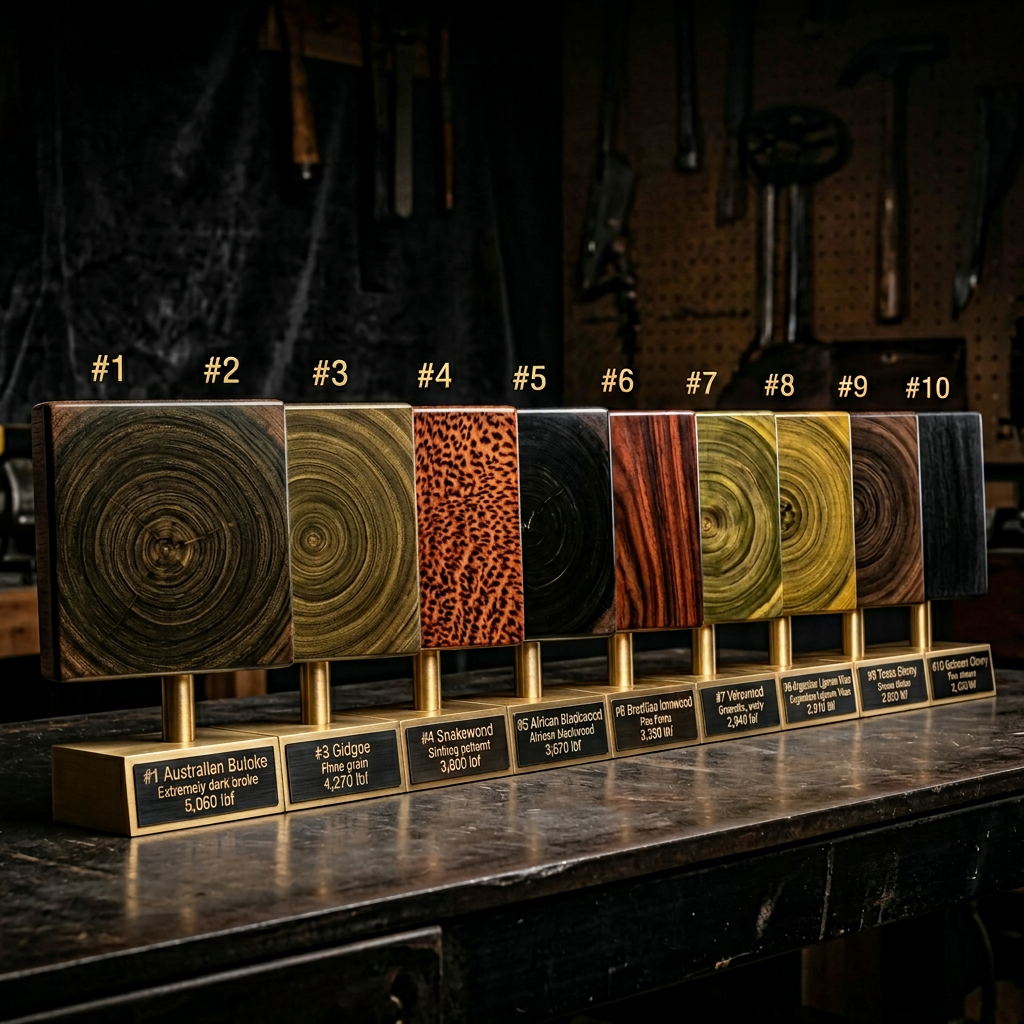
Janka Hardness (lbf or N)
What it measures: Resistance to denting and wear. Specifically, the force required to embed a 0.444-inch steel ball halfway into the wood.
Why it matters: Flooring, tabletops, workbenches — anything subject to impact or abrasion.
Reference points:
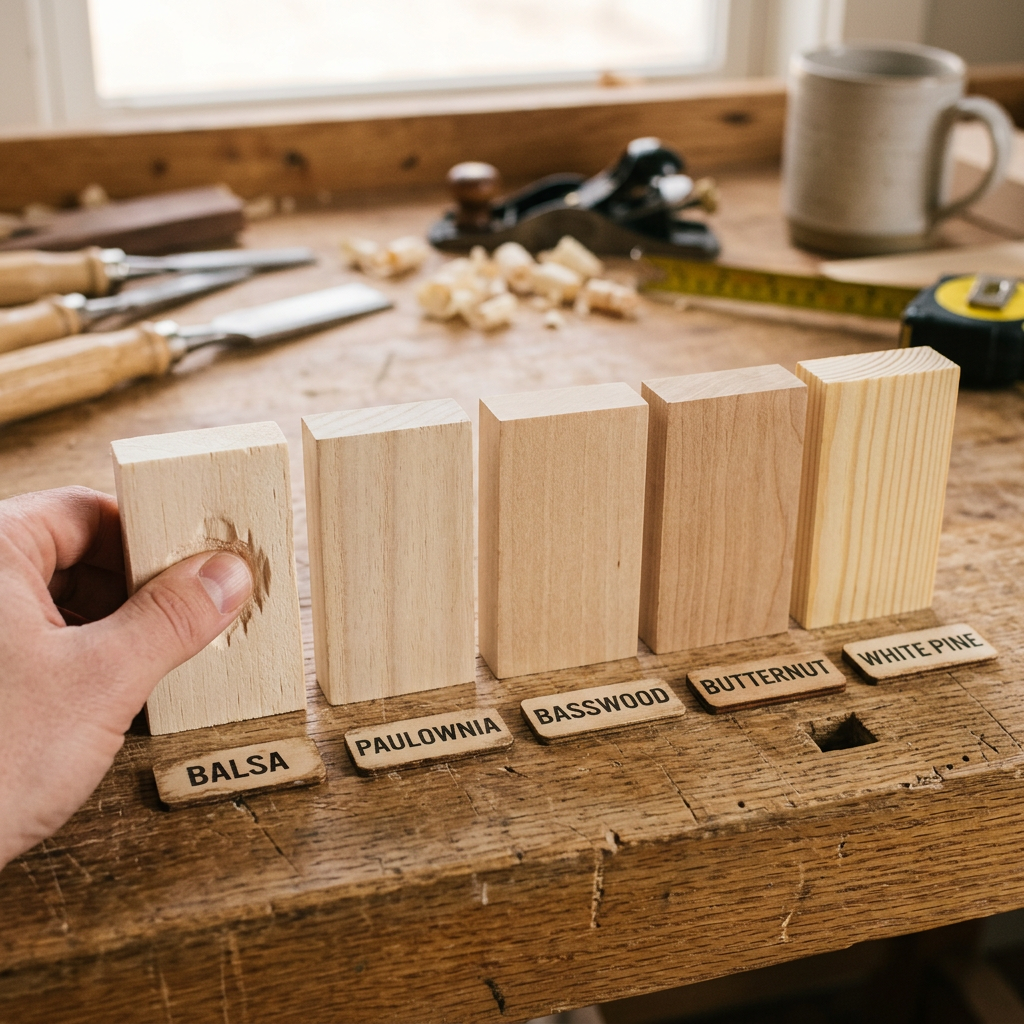
- •Balsa: 67 lbf (extremely soft)
- •Eastern White Pine: 380 lbf (soft)
- •Black Cherry: 950 lbf (medium)
- •Red Oak: 1,290 lbf (medium-hard)
- •Hard Maple: 1,450 lbf (hard)
- •Hickory: 1,820 lbf (very hard)
- •Ipe: 3,510 lbf (extremely hard)
- •Lignum Vitae: 4,500 lbf (hardest commercial wood)
Explore our interactive Janka hardness chart for visual comparisons.
Density / Specific Gravity
What it measures: How much a given volume of wood weighs, expressed as specific gravity (ratio to water) or dried weight per cubic foot.
Why it matters: Density correlates with nearly all other strength properties. Denser wood is generally harder, stronger, and stiffer.
Reference points:
- •Balsa: 0.16 SG (9 lb/ft³)
- •Western Red Cedar: 0.32 SG (23 lb/ft³)
- •Black Walnut: 0.55 SG (38 lb/ft³)
- •White Oak: 0.68 SG (47 lb/ft³)
- •Lignum Vitae: 1.25 SG (79 lb/ft³, sinks in water)
Modulus of Rupture (MOR) — psi
What it measures: Bending strength — the maximum stress a beam can withstand before breaking.
Why it matters: Shelves, chair legs, structural beams — anything that bears a bending load.
Higher MOR = stronger wood.
Elastic Modulus (MOE) — Mpsi or GPa
What it measures: Stiffness — how much a beam deflects under load before permanent deformation.
Why it matters: Long shelves, instrument soundboards, structural members where deflection matters.
Higher MOE = stiffer wood (less sag/deflection).
Crushing Strength — psi
What it measures: Compression strength parallel to the grain — how much load a column can bear before crushing.
Why it matters: Table legs, posts, columns, structural compression members.
Shrinkage Values
What they measure: How much wood shrinks as it dries, expressed as percentages:
- •Radial shrinkage — across the growth rings
- •Tangential shrinkage — along the growth rings
- •Volumetric shrinkage — total volume change
T/R Ratio: The ratio of tangential to radial shrinkage. A higher ratio means the wood is more prone to warping and distortion.
- •T/R < 1.5 = very stable
- •T/R 1.5-2.0 = average
- •T/R > 2.0 = more prone to warping
How to Use This Data
For Flooring
Prioritize Janka hardness (1,200+ lbf recommended for residential) and dimensional stability (low shrinkage values).
For Furniture
Balance hardness (for wear resistance) with workability (softer woods are easier to shape). MOR matters for structural components.
For Shelving
Prioritize MOE (stiffness) to minimize sag. Even a hard wood will sag if it has low stiffness.
For Outdoor Projects
Density and hardness matter less than decay resistance and dimensional stability.
For Instruments
Unique combination of high MOE (stiffness) with low density — gives the best sound transmission. This is why Sitka Spruce is the premier instrument soundboard wood.
Compare species properties side-by-side using our comparison tool.