The Problem: Oil vs. Glue
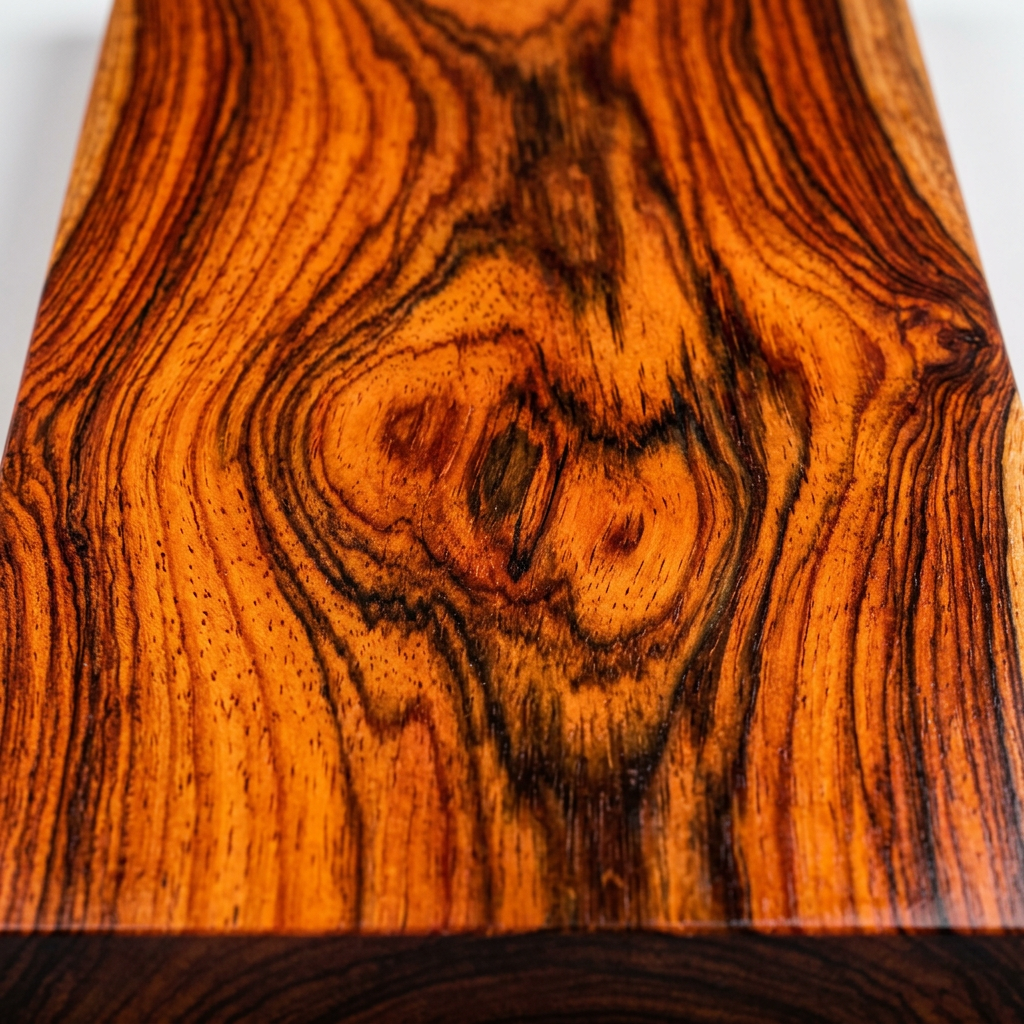
Oily tropical hardwoods (Teak, Cocobolo, Rosewood, Ipe, Ebony) contain natural oils and resins that migrate to the surface and prevent adhesive from bonding to the wood fibers. A standard yellow wood glue joint on these species can fail with hand pressure.
The Golden Rule
Freshly machined or sanded surfaces + solvent wipe + fast glue-up = reliable joint.
Step-by-Step Protocol
1. Fresh Surfaces
Joint or sand mating surfaces immediately before gluing. Natural oils begin migrating to the surface within minutes of machining.
2. Solvent Wipe
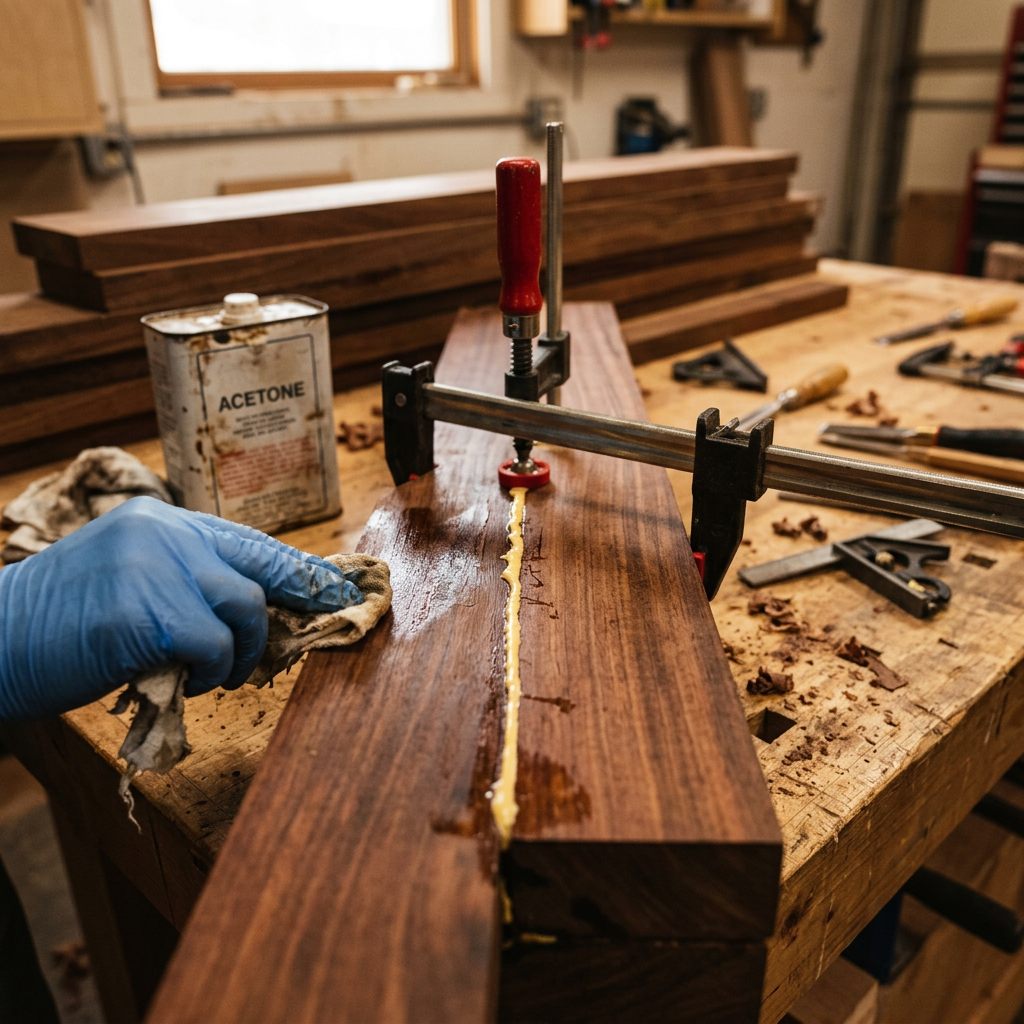
Wipe both mating surfaces with acetone (preferred) or naphtha using a clean, lint-free cloth. This dissolves the surface oils.
3. Glue Within 30 Minutes
Apply adhesive within 30 minutes of the solvent wipe, before oils migrate back.
4. Use the Right Adhesive
| Adhesive | Effectiveness on Oily Woods |
|---|---|
| Epoxy | Best choice — gap-filling, not dependent on wood porosity |
| Polyurethane (Gorilla Glue) | Good — foaming action helps penetration |
| Cyanoacrylate (CA/Super Glue) | Good for small joints |
| Yellow Wood Glue (PVA) | Poor — requires water penetration |
| Hide Glue | Poor — water-based |
5. Adequate Clamping
Use sufficient clamp pressure to squeeze out excess adhesive and ensure intimate contact. Dense woods don't compress under clamp pressure like softer species.
Best Adhesive Choices
Epoxy (Recommended)
- •Why: Doesn't require water penetration; bonds mechanically and chemically
- •Type: Two-part epoxy, slow-set (30+ minute working time)
- •Tip: Roughen surfaces with 80-grit before epoxy application for mechanical grip
Polyurethane Glue
- •Why: Moisture-curing; foaming action penetrates into surface irregularities
- •Tip: Lightly mist surfaces with water before applying (PU glue needs moisture to cure)
Additional Tips
- •Score the surface — Light cross-hatch scoring with a knife creates mechanical grip
- •Don't over-sand — Very fine sanding (400+) can burnish oily woods, making them harder to glue. Stop at 150-180 for gluing surfaces.
- •Temperature matters — Warm wood (above 60°F) allows better adhesive flow
- •Test first — Always test your glue-up technique on scrap before committing to your project