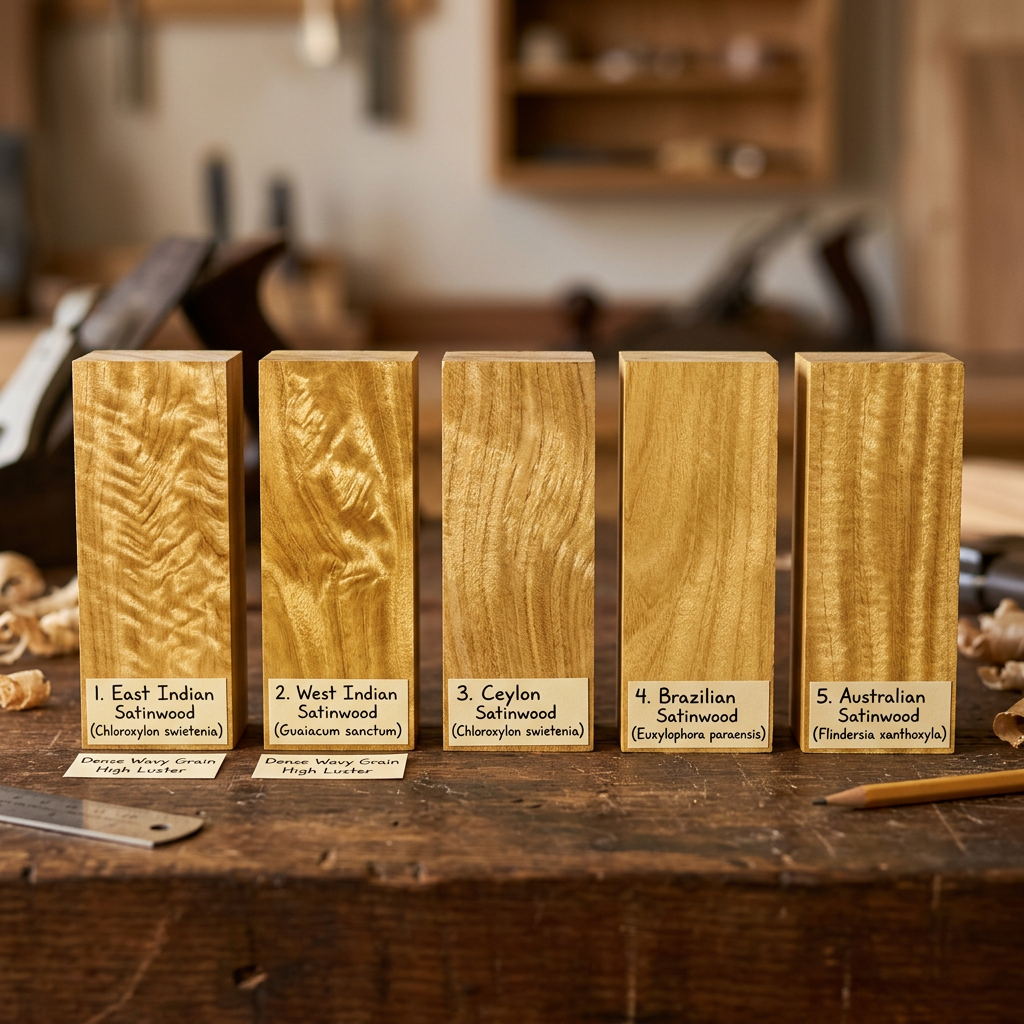
Multiple Woods, One Name
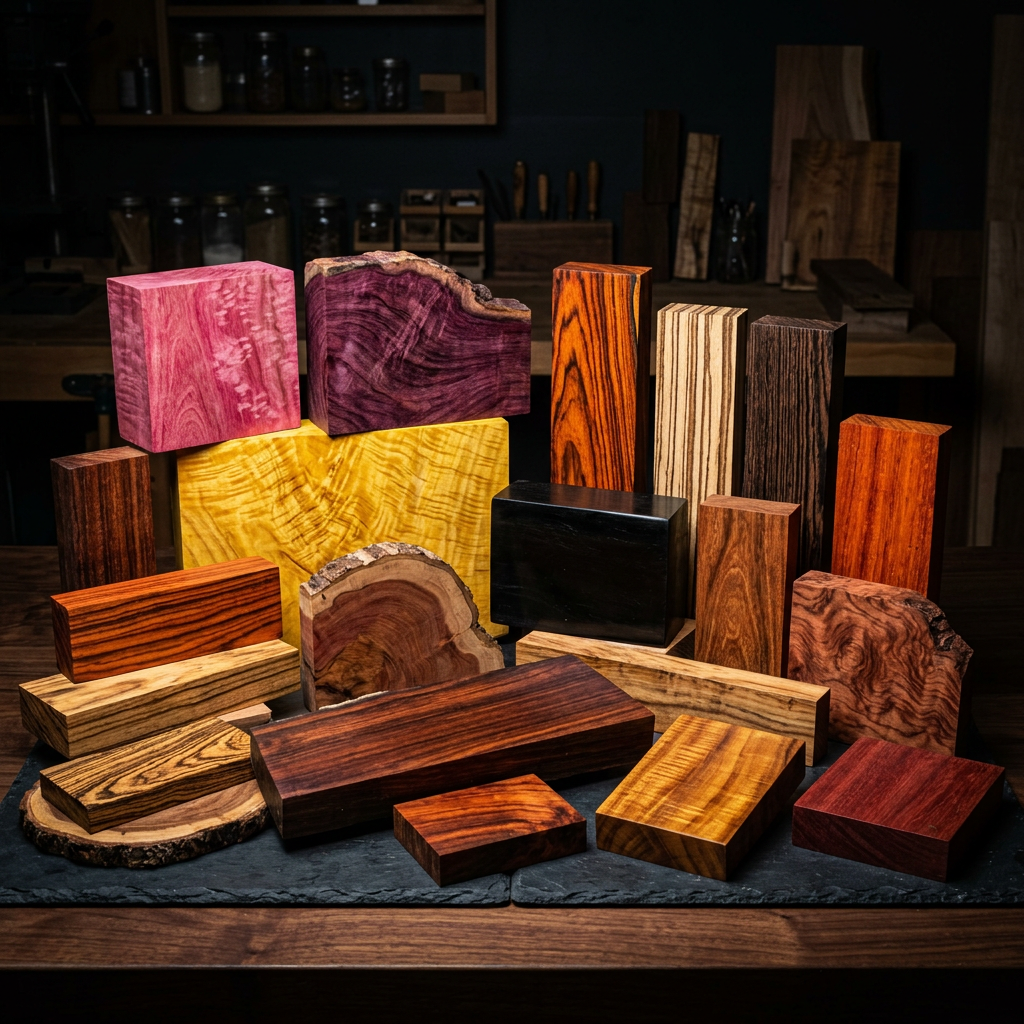
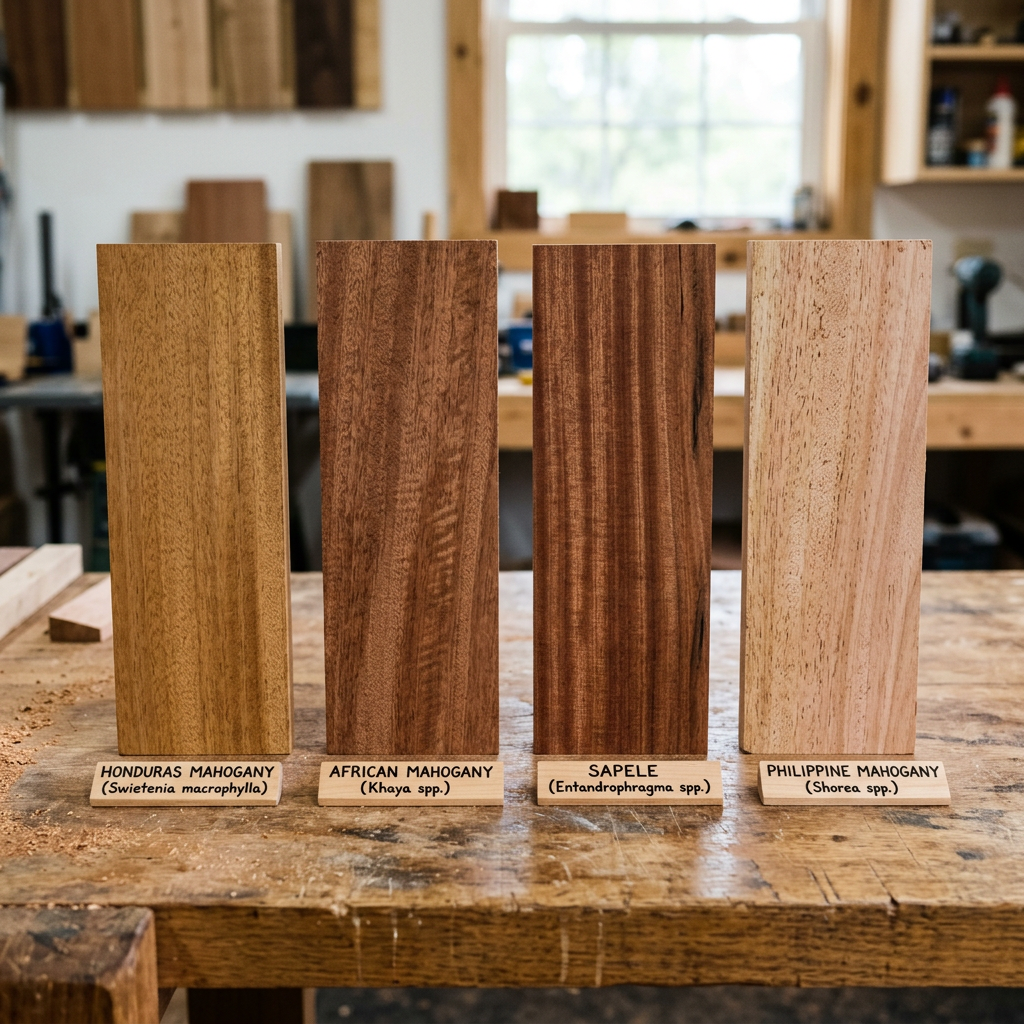
Like "mahogany," the name "satinwood" is applied to several unrelated species. Understanding which species you're dealing with matters for both workability and value.
Ceylon Satinwood (Chloroxylon swietenia)
The original and most highly valued satinwood.
- •Origin: Sri Lanka (Ceylon) and southern India
- •Color: Golden yellow with rich, lustrous sheen
- •Grain: Interlocked with spectacular ribbon figure and bee's-wing mottle
- •Density: ~60 lb/ft³
- •Hardness: Very hard
- •Availability: Rare and expensive
- •Historical use: Premium Sheraton and Regency period furniture
East Indian Satinwood (Chloroxylon swietenia)
Essentially the same species as Ceylon Satinwood but from India. Properties are virtually identical.
West Indian Satinwood (Zanthoxylum flavum)
- •Origin: Caribbean and southern Florida
- •Color: Golden yellow, similar to Ceylon
- •Density: ~56 lb/ft³
- •Status: Rare; the tree is threatened in many parts of its range
- •Quality: Excellent but less figured than Ceylon Satinwood
African Satinwood (Afzelia spp. or Zanthoxylum gilletii)
- •Origin: West and Central Africa
- •Color: Yellow to golden, less lustrous than true satinwood
- •Properties: Less hard, coarser texture
- •Price: Significantly less expensive
Brazilian Satinwood / Pau Amarelo (Euxylophora paraensis)
- •Origin: Brazil
- •Color: Bright yellow, vivid
- •Also known as: Yellowheart
- •Properties: Dense, hard, excellent luster
How to Identify
| Feature | Ceylon | West Indian | African |
|---|---|---|---|
| Figure | Spectacular mottle | Good | Minimal |
| Luster | Exceptional | Very good | Moderate |
| Density | ~60 lb/ft³ | ~56 lb/ft³ | ~45 lb/ft³ |
| Price | Very high | High | Moderate |
The primary identifier is figure and luster — Ceylon Satinwood's bee's-wing mottle and extraordinary chatoyance are difficult to replicate.