The Most Confused Name in Wood
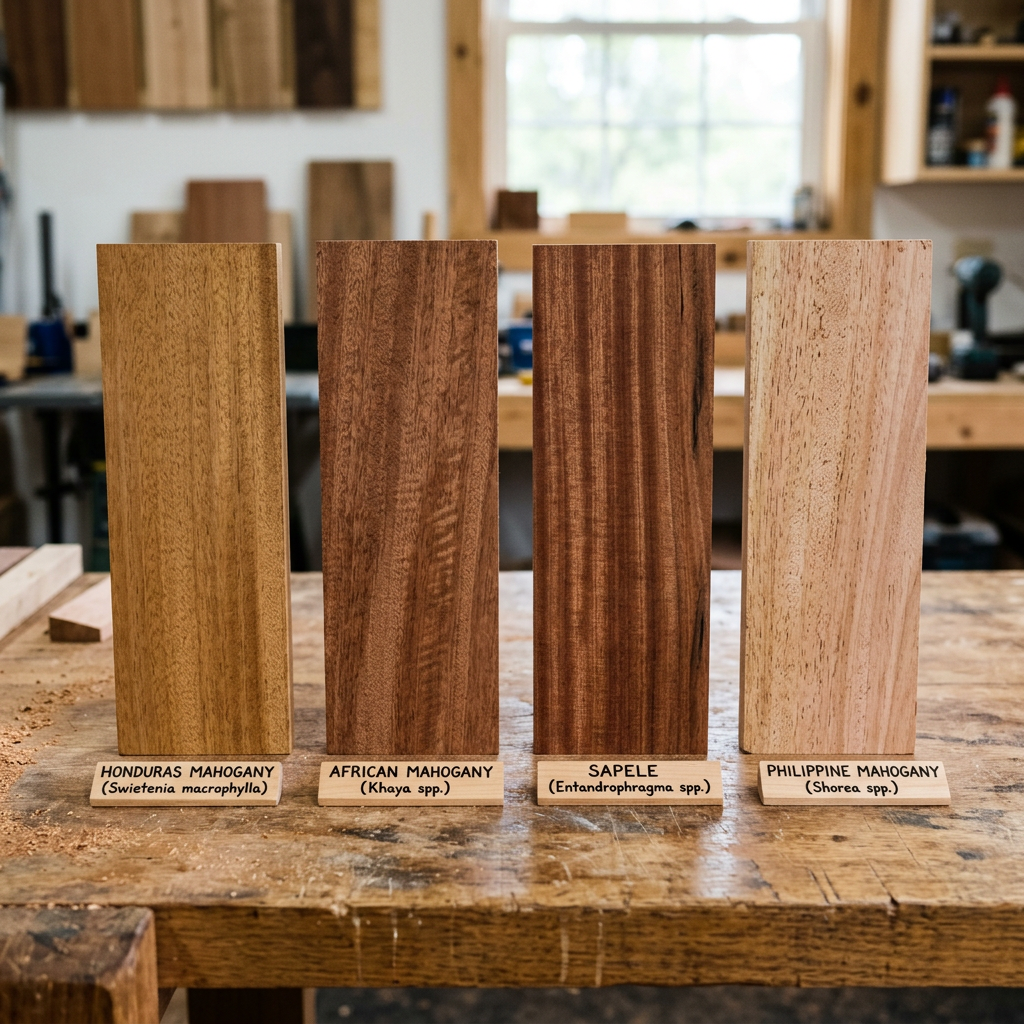
No wood name causes more confusion than "mahogany." The term is applied to dozens of unrelated species from multiple continents, ranging from genuine Swietenia to woods that bear little resemblance to the original.
True Mahogany (Genus Swietenia)
Honduras/Bigleaf Mahogany (Swietenia macrophylla)
- •CITES Status: Appendix II
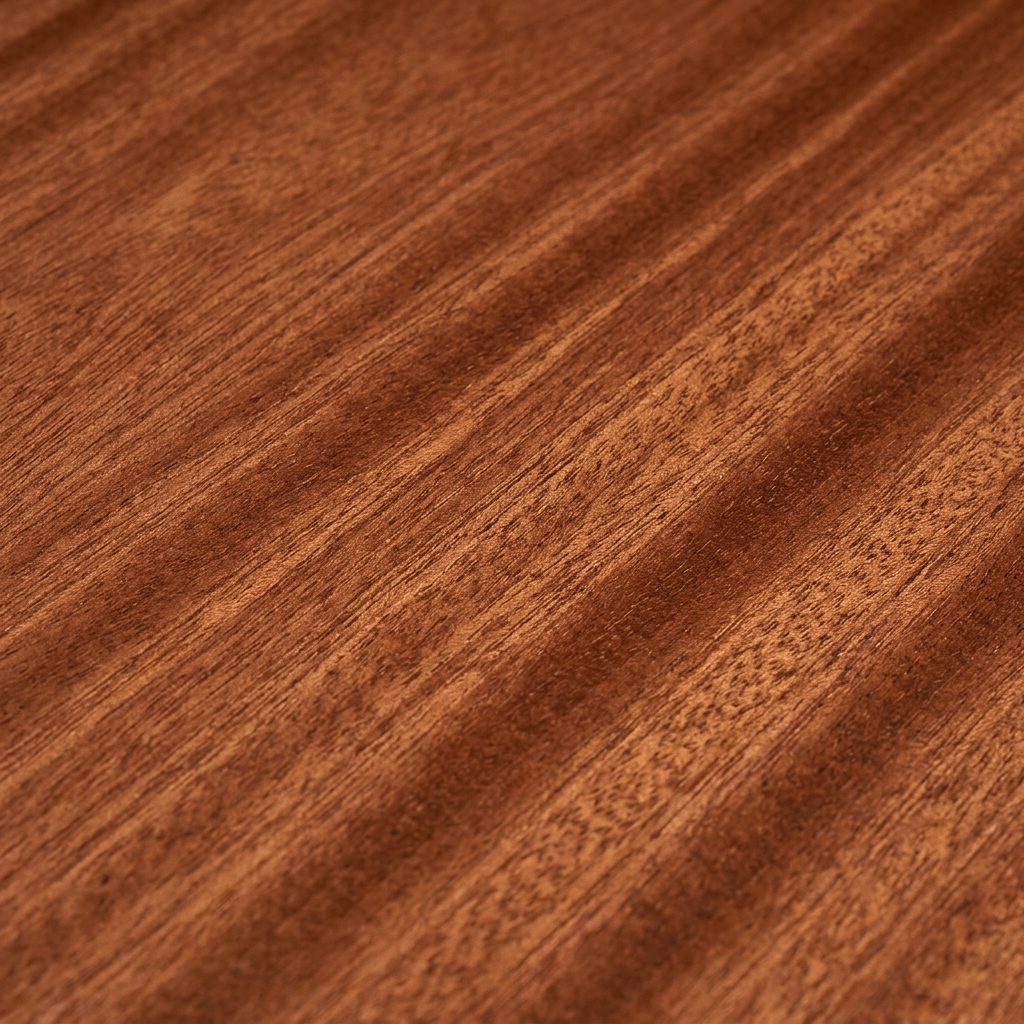
- •Color: Reddish-brown with golden undertones, darkens with age
- •Grain: Straight to interlocked, ribbon figure common
- •Density: ~36 lb/ft³
- •Workability: Exceptional — often called the gold standard
- •The real deal: This is what antique furniture makers meant by "mahogany"
Cuban Mahogany (Swietenia mahagoni)
- •Status: Commercially extinct, CITES Appendix II
- •Note: The original "mahogany" from the Caribbean, now extremely rare
African Mahoganies (Genus Khaya and Entandrophragma)
Khaya / African Mahogany (Khaya spp.)
- •Color: Similar to genuine mahogany, slightly more pinkish
- •Density: ~35 lb/ft³
- •Quality: Decent substitute, but generally coarser and less figured
- •Price: Lower than genuine mahogany
Sapele (Entandrophragma cylindricum)
- •Color: Darker reddish-brown than true mahogany
- •Grain: Interlocked with distinctive ribbon stripe when quartersawn
- •Density: ~42 lb/ft³ (notably harder than true mahogany)
- •Quality: Excellent wood in its own right, often better than generic Khaya
Utile/Sipo (Entandrophragma utile)
- •Color: Similar to Sapele but slightly lighter
- •Quality: Very good mahogany substitute
Not-Really-Mahogany Species
Philippine "Mahogany" (Various Shorea spp.)
- •Actually: Meranti/Lauan — completely unrelated to true mahogany
- •Quality: Much softer, lighter, and less durable
- •Note: The term "Philippine Mahogany" has been banned in some regions as misleading
Santos Mahogany (Myroxylon balsamum)
- •Actually: A completely different species (also called Cabreuva)
- •Properties: Much harder and denser than true mahogany
How to Navigate the Confusion
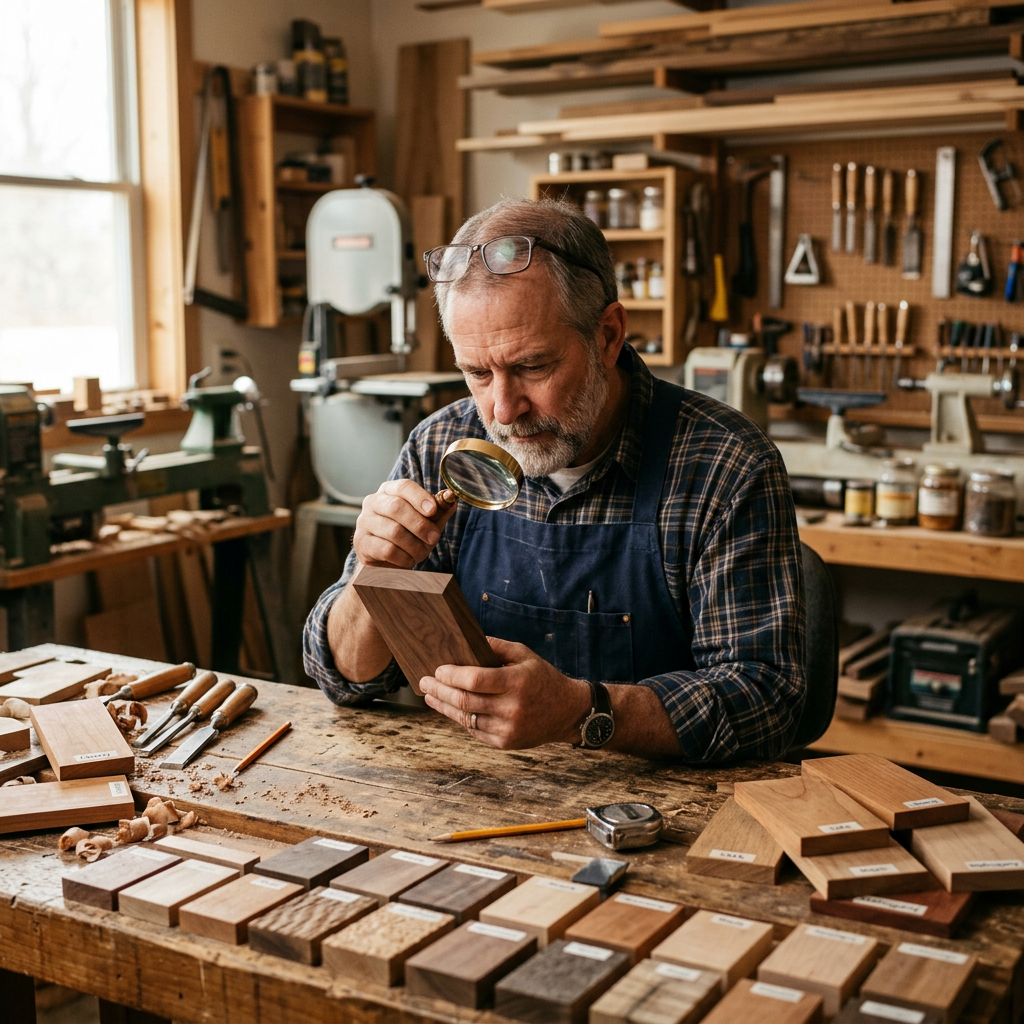
- •Always ask for the botanical/scientific name — not just "mahogany"
- •If it's cheap, it's probably not genuine Swietenia
- •Check the weight — genuine mahogany is relatively light (~36 lb/ft³)
- •Look at the grain — genuine mahogany has a distinctively straight-to-ribbon grain
- •Sapele is an excellent alternative if you can't find genuine Honduras Mahogany
Ranking for Quality (as Mahogany Substitutes)
- •Honduras Mahogany — The genuine article (CITES regulated)
- •Sapele — Arguably better than generic African Mahogany
- •Utile/Sipo — Excellent, underappreciated substitute
- •Khaya — Acceptable, widely available
- •Philippine Mahogany — Not recommended as a mahogany substitute