Choosing the Right Finish
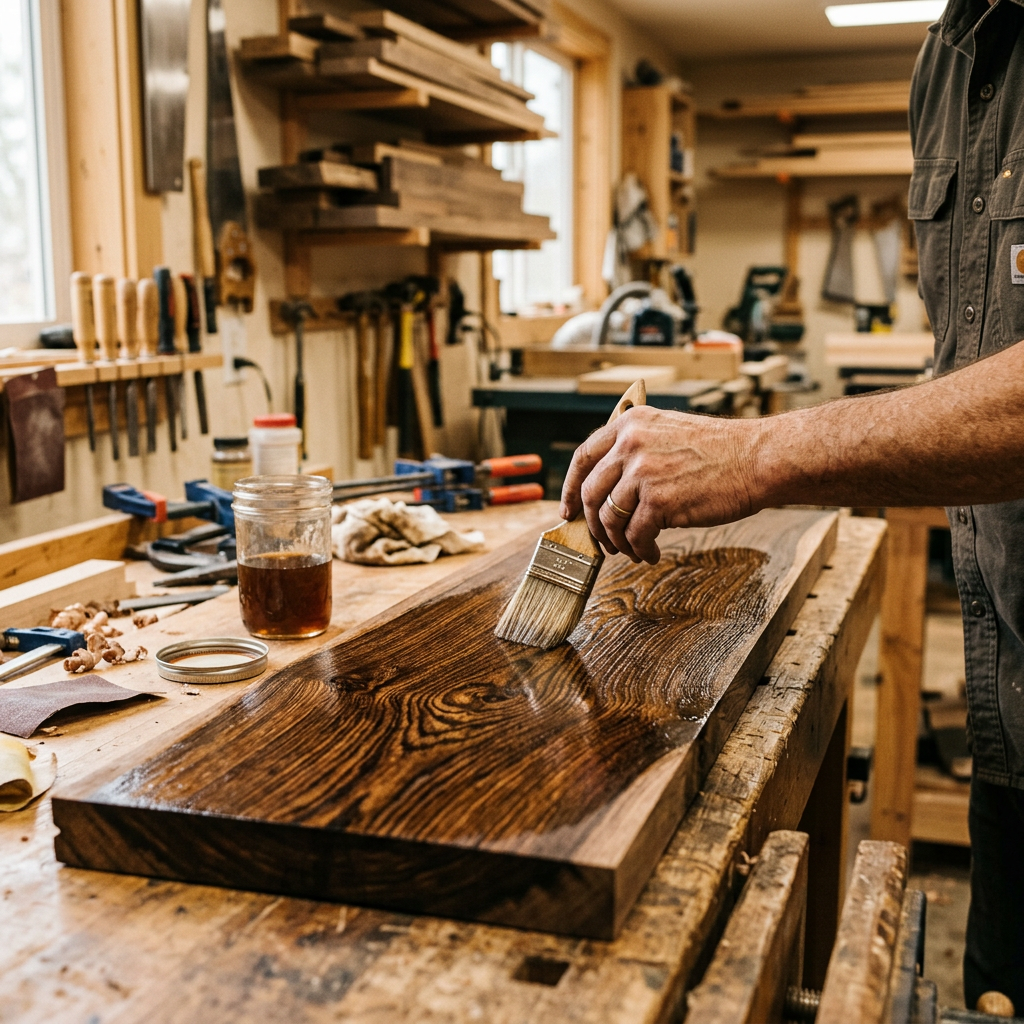
The right finish protects your work, enhances its beauty, and matches the project's intended use. The wrong finish can ruin months of careful woodworking.
Finish Categories
Penetrating Finishes (Soak into the wood)
Boiled Linseed Oil (BLO)
- •Best for: Easy, natural look; restoring antiques
- •Durability: Low — minimal protection
- •Application: Wipe on, wait, wipe off
- •Dry time: 24-48 hours between coats
- •Note: "Boiled" BLO contains metallic driers; raw linseed oil takes weeks to dry
Tung Oil (Pure)
- •Best for: Natural, food-safe finish; outdoor furniture
- •Durability: Moderate — better than BLO
- •Application: Wipe on thin coats
- •Dry time: 24-48 hours between coats
- •Note: Pure tung oil requires many coats; "tung oil finish" products are often varnish blends
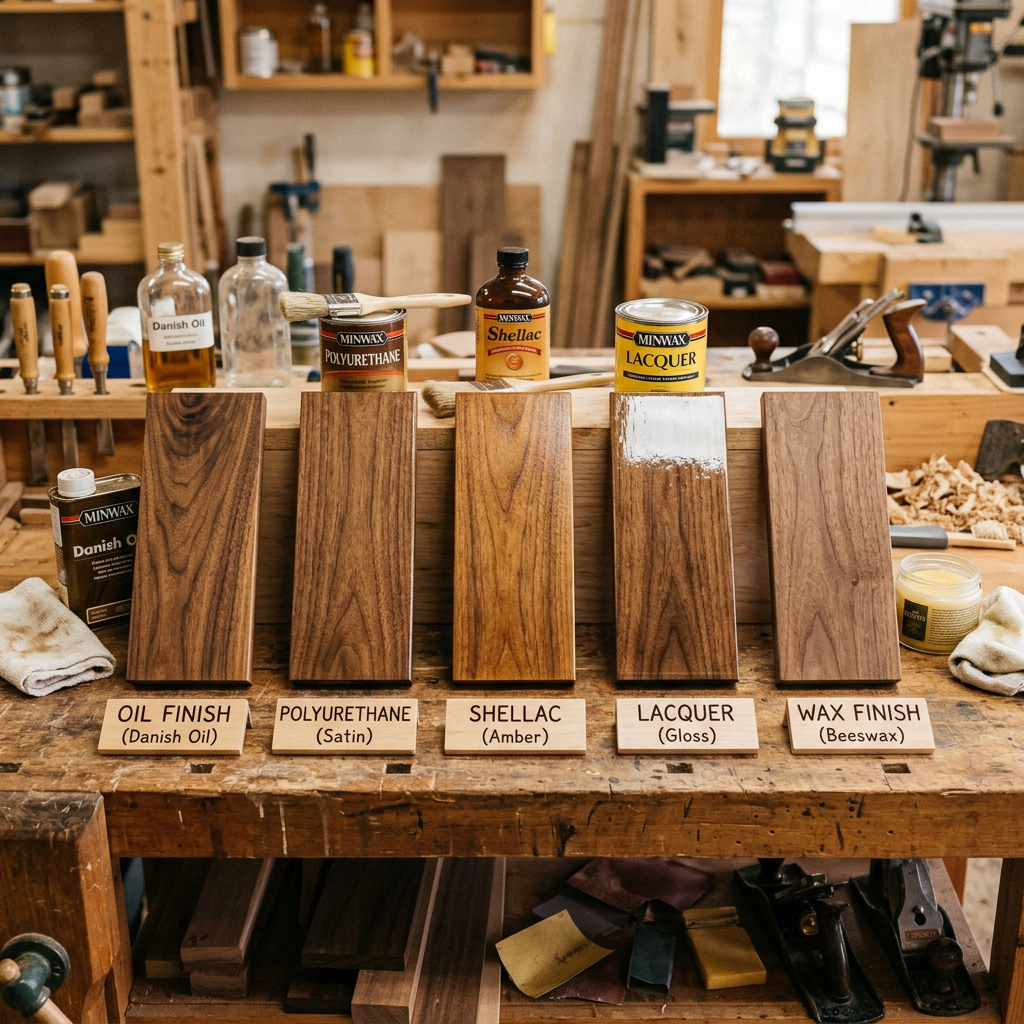
Danish Oil
- •Best for: Quick, attractive finish with moderate protection
- •What it is: Blend of oil and varnish
- •Application: Wipe on, wait, wipe off
- •Good all-around choice for furniture that won't see heavy abuse
Film Finishes (Sit on top of the wood)
Shellac
- •Best for: French polish, restoration, sealing
- •Durability: Moderate (not water or alcohol resistant)
- •Application: Brush, spray, or pad (French polish)
- •Dry time: Very fast (15-30 minutes)
- •Pros: Food-safe when cured, beautiful depth, easy to repair
- •Cons: Dissolves in alcohol, poor water resistance
Lacquer
- •Best for: Professional furniture finishing
- •Durability: Good
- •Application: Spray (best results), brush (special brushing lacquer)
- •Dry time: Very fast (minutes)
- •Pros: Fast production, rubs out beautifully, repairable
- •Cons: Requires spray equipment, flammable, ventilation essential
Oil-Based Polyurethane
- •Best for: Flooring, tabletops, high-wear surfaces
- •Durability: Excellent
- •Application: Brush or wipe
- •Dry time: 4-8 hours between coats
- •Pros: Very durable, good water resistance
- •Cons: Yellows over time, slow drying, harder to repair
Water-Based Polyurethane
- •Best for: Light-colored woods where yellowing is undesirable
- •Durability: Good to excellent
- •Application: Brush or spray
- •Dry time: 1-2 hours between coats
- •Pros: Non-yellowing, fast drying, low odor
- •Cons: Can raise grain, less depth than oil-based
Conversion Varnish / Catalyzed Lacquer
- •Best for: Professional cabinetry, commercial furniture
- •Durability: Excellent — the most durable wood finish
- •Application: Spray only
- •Note: Professional-grade; requires proper spray equipment
Specialty Finishes
Wax
- •Best for: Antique restoration, low-sheen topcoat over another finish
- •Durability: Very low alone
- •Application: Rub on, buff off
Milk Paint
- •Best for: Primitive/antique look, chalk-paint alternative
- •Application: Brush
- •Note: Must be topcoated for durability
Quick Selection Guide
| Project | Recommended Finish |
|---|---|
| Dining table | Oil-based polyurethane or conversion varnish |
| Jewelry box | Shellac or lacquer |
| Cutting board | Mineral oil + beeswax (food-safe) |
| Outdoor furniture | Marine spar varnish or penetrating oil |
| Kitchen cabinets | Conversion varnish or water-based poly |
| Child's toy | Shellac (food-safe) or food-grade mineral oil |
| Hardwood floor | Oil-based or water-based polyurethane |
| Antique restoration | Shellac or wax |
| White/light finish | Water-based polyurethane (non-yellowing) |
| Quick project | Danish oil or spray lacquer |
Application Tips
- •Sand properly before finishing (up to 220 grit for film finishes, 320+ for oil finishes)
- •Remove all dust with tack cloth or vacuum
- •Apply thin coats — multiple thin coats beat one thick coat every time
- •Sand between coats with 320-400 grit for film finishes
- •Follow manufacturer's instructions for dry times
- •Test on scrap from the same board when possible